00:00:03
Speaker 1: My name is Charlie kirk I run the largest pro American student organization in the country, fighting for the future of our republic. My call is to fight evil and to proclaim truth. If the most important thing for you is just feeling good, you're gonna end up miserable. But if the most important thing is doing good, you'll end up purposeful. College is a scam, everybody. You got to stop sending your kids to college. You should get married as young as possible and have as many kids as possible. Go start at turning point you would say college chapter. Go. Start at turning point youould say high school chapter. Go find out how your church can get involved. Sign up and become an activist.
00:00:39
Speaker 2: I gave my.
00:00:39
Speaker 1: Life to the Lord in fifth grade, most important decision I ever made in my life, and I encourage you to do the same.
00:00:45
Speaker 3: Here I am Lord, Use me.
00:00:48
Speaker 1: Buckle up, everybody, Here we go. Noble Gold Investments is the official gold sponsor of the Charlie Kirkshaw, a company that specializes in gold I rays and physical delivery of precious metals. Learn how you could protect your wealth with Noble Gold Investments at noblegold investments dot Com. That is Noblegoldinvestments dot Com.
00:01:17
Speaker 4: All right, welcome to the Charlie Kirk Show. It's Monday, May fourth, May the fourth be with you.
00:01:22
Speaker 3: Of course, for.
00:01:22
Speaker 2: All you stall junk that don't do this to me.
00:01:25
Speaker 3: The studio was intent that I bring it up.
00:01:29
Speaker 4: I am so apologies, Blake, apologies to all of you out there who are not Star Wars stands. I am not really a Star Wars stand I've never I mean, I like the original.
00:01:38
Speaker 3: It's just fine.
00:01:39
Speaker 2: Yeah, that's the thing. It was good. It was more justice all to be a Star Wars nut when there were six movies and maybe three and a half of them were good. Three yeah, three, three movies were good, and then you could like the games and whatever and the legos. But now there's endless Disney Star Wars slop and ninety percent of.
00:01:58
Speaker 3: It is bad.
00:01:59
Speaker 4: It is terrible. Six movies are good, says Caboose in our studio, fine, I would probably go with four and a half. So it is May fourth. I am feeling a little bit under the weather today, so bear with me. I don't know it's going around. What can I say, but toughing it out. Excited to be here, and there's lots of news to go over. Of course, over the weekend, it feels like there's always a lot of news, and then.
00:02:25
Speaker 3: We catch up on it on the Monday.
00:02:28
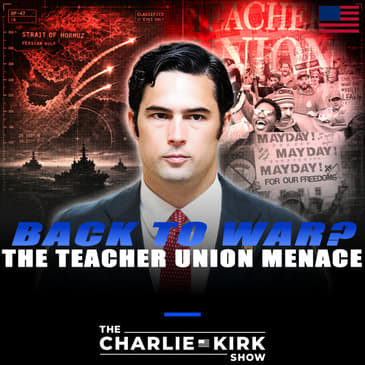
Speaker 4: We are here at the y Refi Studios in Phoenix, Arizona, and it's a beautiful thing. But over the weekend, Trump announced via true Social that he was going to start opening the Straight, escorting countries that are quote unquote victims of circumstance, and he's calling it Operation Freedom, where they're going to be leading and guiding ships through the Strait of horn Moos to sort of ease maybe the economic fallout from the Straight being closed. Obviously, about twenty to thirty percent of the world's energy flows through the Strait of horn Moose. And just before the show began, we started hearing rumors that Iran was firing back after this announcement from the President.
00:03:12
Speaker 3: So what do we have?
00:03:13
Speaker 4: We have The UAE says that four missiles have been shot at the UAE four cruise missiles, three were intercepted, one dropped into the sea. But we are also getting confirmations that there is a fire at the Fujaira oil industry zone. So goes by Poise caused by a drone strike coming from Iran, and UAE is issuing safety alerts and basically this is now an open question does this violate the cease fire? Are we about to see a return to kinetic hostilities led by the US military in the region. We are told there's about fifteen thousand service members activated right now in this moment. There was also reports, unconfirmed I believe at this point that a South Korean tanker was hit by a mine in the Strait, so we're looking for confirmation on that. But this then is it seems like a return to the storylines of about a month ago blake or three weeks ago, where you know, we could be at the precipice of active military strikes against Iran once more.
00:04:26
Speaker 2: We could we could see more strikes. We could see attempt you know, if they're launching stuff at the UA, that could very much be signaling ships shouldn't join this attempt to run the blockade. They're trying to show they can still shoot missiles that can hit things, trying to spook them. So we might see an escalation where the US tries to induce ships to come along, ran might try to hit them if they do, then they might see strikes. You know, we're seeing why this has proven such an intractable and difficult conflict, which is it's been difficult for us to actually shut down Iran's ability to launched missiles. We haven't knocked down that regime. The blockade does seem to be having some effect, but it hasn't caused the regime to collapse. It's difficult to destroy a country by blockade, even when it's an island, as we've seen with Cuba.
00:05:13
Speaker 3: Yeah.
00:05:13
Speaker 4: Well, so the major effect I think of the blockade is economic. Right, the forty percent of Around's GDP has been wiped off the books in just the last two months, and there is an issue when you stop oil production. So essentially what is happening in Iran is that they are still pumping because if you stop pumping, you can cause permanent damage to the wells. They might not ever come back actually in the same way that they were, so either you lose them altogether or future production is greatly degraded. So what they have to now do, since they're not able to get any of their oil out, is they're trying to find storage in Iran. So you're trying to find places where you can actually store the oil, and once you run out of that, then you have to stop production. And there's another issue is that when the oil is going out, obviously you're getting revenue in. Well, if you stop getting revenue in, and this represents the vast majority of the Iranian economy, then essentially you're going to run out of the ability to pay your troops. So they are looking at about twenty days out from running out of money according to estimates, to be able to pay their troops. The question is will that stop the IRGC, Will you get massed affections?
00:06:23
Speaker 3: Will they just kind of tough it out?
00:06:25
Speaker 4: Grin and Barrett The line that everybody likes to use is that they have a high pain threshold and can tolerate a long term, drawn out, painful situation.
00:06:35
Speaker 2: What I will say is, I think we've seen a lot of very optimistic estimates that they can't last another day, they can't last another week, and we're two almost two and a half months into this and it hasn't fallen yet. So I think we're seeing why it was We're frankly seeing why Charlie issued so many warnings about a conflict.
00:07:00
Speaker 4: Yeah, I mean This was the great white whale of the Neo Kon establishment is they wanted to take out the Iranian regime. This is why we are always skeptical about it. This is why we didn't We didn't, you know, beat the drums of war over at the Charlie Kirk Show. It's because this is a varya, as you say, intractable potential problem. How do you finish this off? If they're willing to just sort of grin and barrett and lose their economy in order to not lose face and to maintain their dignity and their sovereignty. And remember that they control the vast majority of the shoreline of the Strait of Hormuz. They're claiming it as their own. Ultimately they're sort offfeckless. But all they have to do is wait it out. Then that becomes a massive problem. So we obviously root for success, but we're also very honest about the fact that there doesn't seem to be a quick, easy, obvious route out of this conflict as we currently see it. Yeah, we're controlling things. We destroyed their navy, we destroyed their mility, terry, their missile capacity to shoot them and to produce them is greatly degraded. But at what point do we just have to keep this going? Is this like a forever quagmire where we just have to blockade the straight and energy prices around the globe remain inflated. So that's a huge, huge question, and we don't have an answer to it yet. And this is why we were always, i would say, warning about this conflict. This is why I think Charlie was accurate to be warning about this conflict. You know, there's a lot of talk about is Iran a rational actor? Are they making decisions rationally? This was obviously first it was a first and foremost the discussion about nuclear weapons, but now becomes obviously it would be in their best interest to get a truce, to get a piece just for economic reasons.
00:08:52
Speaker 3: Are they rational in that sense?
00:08:54
Speaker 4: I'm not so sure that they're going to behave rationally when it comes to this, because they believe that they have the leverage, and we talk about leverage it they think they have the leverage because they can stand this conflict longer, potentially than the patients of the American people.
00:09:09
Speaker 2: And the what we'll say is also there's going to be because we've been around this for several months. There's going to be people, I think adjacent to the White House, maybe in the White House, who will tell the President if you do this one thing, if you take this one step that's more aggressive, put boots on the ground, sees carg Island, you'll be able to end the war. One, be skeptical of that. And two we ask every young person who comes on this show how their friends feel about this, and every single time they've said, it's very unpopular.
00:09:38
Speaker 4: Yeah's been a lot of political capital on this conflict, and you know, hopefully it ends well, but it's very unclear, very unclear at the at the present moment. All right, So May Day, Blake, I don't know what you know about may Day, but it's a comedy day.
00:09:56
Speaker 3: It's a comedy day.
00:09:57
Speaker 4: It's actually the International Workers Day, which is code for communism. And listen, we like workers as much as the other guy, but like you know, don't fall for the nice sounding slogans workers Day.
00:10:11
Speaker 3: Oh it sounds like I'm a worker. I support that.
00:10:14
Speaker 4: No, this is this is you know, absolutely from far left progressive groups. And basically what happened was it was a workers over billionaires coalition called for a nationwide day of action with the slogan no School.
00:10:29
Speaker 3: Interesting that they put that.
00:10:30
Speaker 4: First, no school, no work, no shopping, involving protests, rallies, walkouts, and an economic blackout aimed at issues like workers' rights, educational funding, opposition to certain policies, and basically anything anti Trump. Okay, but this made a lot of news because over twenty school districts, mostly the largest ones in the country, participated in this walkout. They claimed it was because there were not going to be teachers and administrators there to take care of the students, But then you find out a lot of these students are getting busts to the protests directly. So there was a full effort to get young people, high schoolers that don't know what the heck they're talking about, candidly about most of these issues, to hold up anti Trump signs, Anti Ice signs, and to just basically take a day off of school. And then you can see them right there, Blake. You find out there's student groups like the Sunrise Movement and labor coalitions, and then you find out the teachers' unions, which we talked about recently, the NAE affiliates were behind all of this. Instead of training your kids in reading, writing, and arithmetic, they're teaching them how to hate Trump.
00:11:44
Speaker 2: Well, yeah, I mean that's the chief goal of a huge number of public school teachers. I should say private school ones across the country as well, but that for a lot of teachers, the chief role of their profession is ideological training, ideological implication, and they're manifestly allowed to do this. We were just discussing in the break how harmy Dillon's DOJ they're investigating I think at least a couple dozen Illinois school districts over gender ideology, and it's just it's pretty simple, which is just did they allow parents to have their children opt out of hearing pro LGBT, protrans propaganda in their classrooms? And apparently they just a lot of them weren't. It wouldn't shock me at all if they weren't. That if you're in public schools, if you're in the school system, you're constantly bombarded with propaganda about race stuff, gender stuff, anti Trump stuff, anti capitalism stuff, and they're weaponizing this more and more to just literally just say, oh, we're going to get kids to leave school because it's important to train kids in activism it's important to training kids to participate in democracy. This is the rhetoric they'll use, and it's really just we want to use children as ideological footste and before we move on, I should just want to not only is May Day a commie holiday, it's specifically a commie holiday to commemorate a left wing bombing in Chicago, the Haymarket bombing. They started a series of marches on the first and on today May fourth, they blew up some police officers and that is what they wanted to commemorate with May Day.
00:13:21
Speaker 3: We got some video here for you, Sat One.
00:13:23
Speaker 5: I think it's a really cool way for us to show our students that they can take their power back and feel empowered for the day. We are organizing our school so that the K through six students are also going to be able to march. We're going to be doing sign making art projects, maybe a banner build with the students. And my students are learning this land is your land. They're going to sing that along the way and some other chance. For seventh and eighth graders are going to be going on a field trip downtown to the Union Park rally at one o'clock. It's really important that we build our power as workers. I'm excited to share that with my students so they can see workers building their own power.
00:13:57
Speaker 4: Kept talking about taking your power back and building your own power, and.
00:14:02
Speaker 3: Which is funny kindergarteners.
00:14:03
Speaker 2: Which is funny because these left wingers hate electricity, so they're actually making the power go out.
00:14:08
Speaker 3: Yeah.
00:14:08
Speaker 4: Well, it's just very interesting that they're using school time to make protest science, which is very indoctrinating, very wrong on multiple levels. It's a street journalist. Nate Friedman followed his work a little bit and he does some fantastic street interviews here top five.
00:14:26
Speaker 3: Yeah, we see kids getting off the bus right now.
00:14:29
Speaker 6: These kids are being busted into protests the United States of America. Are kids being brought to the protests here today?
00:14:34
Speaker 3: There we have around two thousand, a little over two thousand, two thousand kids. How many different schools?
00:14:40
Speaker 7: Oh my gosh, there's a lot of them.
00:14:41
Speaker 6: How long have you been briefed about here today? It's been like weeks of preparation months. All the science professionally printed here by the PSL, which is funded by Soros through you know, you've got Progress Unity Fund, You've got the Justice and Education Fund through Singam.
00:14:55
Speaker 3: Here I'm saying right here, you can see behind me, this is what's happening.
00:15:02
Speaker 6: Your tax dollars are being used to bust kids.
00:15:05
Speaker 8: Two a protest, do a day of action, the civic Day of Action for students so students can learn about their civil rights and unfortunately that are currently being eroded by our current US government.
00:15:17
Speaker 4: Yeah, so you know, Nate does a good job of identifying the financing that goes into this. Neville Singham obviously, who is a billionaire that lives in China, He's funding a bunch of this stuff. You do have the Soros funding professionally made signs. You've got young people getting in doctrinated. You hear that Mexican music in the background. I think that was Chicago, by the way, which is just wild.
00:15:40
Speaker 2: Your people's music.
00:15:41
Speaker 4: Andrew, Yeah, well listen, I can't stand that stuff. I'm being honest. It just sounds all the same to me. It's like horns blaring and sounds all the same.
00:15:48
Speaker 2: It's like country music. Oh I'm gonna get We're gonna get angry emails again.
00:15:51
Speaker 4: So I'm I like country music. I grew up with it, though I come from rancher stocks. So it's a whole different thing for me. But you're you're, you're like the point is, you know, evil never sleeps, And the second you think you're making progress in the country in any way, shape or form, you've got these people that will continually pump millions, if not more tens of millions into indoctrinating young kids to go protest what they don't even know.
00:16:18
Speaker 2: I mean, for a lot of you out there, the easiest comparison if someone told you you can't go to church anymore, you can't be Christian anymore, how would you react to it? That is the frame you need to think of for a lot of these people in terms of doing left wing marches, doing left wing politics, it really is their religion.
00:16:37
Speaker 4: If you've been listening for a while, you may have noticed something new. Andrewantodd dot Com is now part of Union Home Mortgage, the parent company Change. But Andrew del Rey and Toddave Akean didn't. I have known these guys for years literally, and they're amazing, amazing, amazing patriots, great Christian men, same people, same values, and the same honest advice.
00:16:59
Speaker 3: Now back by an national lender and right.
00:17:01
Speaker 4: Now a lot of homeowners are wondering if there's an opportunity for them in this market.
00:17:05
Speaker 3: Everybody's asking this question.
00:17:07
Speaker 4: With rates and home values constantly shifting, it's a smart time to review your mortgage and see what options you may have. You might be able to refinance, lower your payment, or consolidate debt. But it all starts with understanding what's possible. That's where Andrew and Todd come in. With over forty years of combined experience. They walk you through the process from start to finish, and they make it easy. Start with a free refinance review today. Go to Andrewantodd dot com. That's Andrew Andtodd dot com or call eight eight eight eight eight eight one one seven to two Triple A Triple eight eleven seventy two Andrewantodd dot com.
00:17:42
Speaker 3: Amazing guys. Check them out. Please.
00:17:47
Speaker 4: Okay, I'm told we have Brandon Gilready, Congressman out of Texas.
00:17:51
Speaker 3: Welcome back to the show. Congressman.
00:17:52
Speaker 9: It's good to be here. Thanks for having me.
00:17:54
Speaker 3: Man.
00:17:54
Speaker 4: You've been on fire lately and really been fun to watch some of what you've been doing, whether it's the congressional testimony on abortion, which we're gonna play that clip in a second talking about immigration, talking about domestic issues, You've been laser focused. In the segment before, we were talking about these May Day protests where you got twenty plus school districts, major school districts and the biggest metropolitan areas of the country walking out. And one of the things you've been talking about as well, Congressman, is this scourge of political violence, the rise of political violence. And so I'm gonna play a clip. This was some of our turning point front lines journalists. I believe it's in Los Angeles and these they get accosted instantly and Charlie's name is invoked.
00:18:37
Speaker 3: I'll play it for you. Top fourteen.
00:18:39
Speaker 6: Well Er, what are you gonna do?
00:18:49
Speaker 1: Currently?
00:18:50
Speaker 3: Cook?
00:18:52
Speaker 1: Terrely cut, totally coot, trtally cut, totally cook, totally could to cook, hardly.
00:19:01
Speaker 7: Cook, hardly cook.
00:19:04
Speaker 4: Congressman, what do you think when you see just that level of vitriol in our country?
00:19:08
Speaker 9: I mean, first of all, that it's kind of amazing. How derange do you have to be to start shouting at college students about somebody who's already been assassinated. I think that that's a level of kind of darkness that most Americans aren't used to in our political system. But there is a scourge of political violence and it is rising in the United States, and it is predominantly coming from the left. Multiple shows polls have shown that multiple poles have shown that more leftists, people who identify is very liberal have an affinity for political violence than those who identify is very conservative. And the difference is astounding. It's about twenty five percent of very liberal versus about three percent of people who identifies very conservative. So it's incredibly skewed towards the left. But this is some This is becoming kind of the new political environment the conservatives are operating under one where whenever you go to a college campus, you expect from the very beginning that you're going to have not only protesters but people coming to disrupt you and at times engagement and just blatant x violent. It's sad that we've gotten to this point, but this is something that is coming from the left.
00:20:23
Speaker 2: It is endlessly I mean, you and I. You and I were both at at Dartmouth at the same time. I think we were both there at the time when they ran over You might remember when they ran over our pro life display with a car to channel a fifteen year old memory. It's very much. And actually we were saying just before you came on these May Day protests established to commemorate a day where left wing anarchists threw bombs at police in Charlie's hometown in Chicago. There's this long history of left wing street violence, left wing agitation, let's just say, left wing hate, and it's bubbling up and it's getting a lot of endorsement from their movement leaders and from their political leaders.
00:21:05
Speaker 9: It is and you know, I think that it's something that there is a long history there. I mean, think about the political left in the United States is kind. They are the inheritors of an ideological movement who has roots and the violence and bloodshed of the French Revolution that then developed throughout revolutions in Europe over the nineteenth century that gave was given further sort of political movement in the Russian Revolution. I mean, this is a an ideology that for most of its history, at least as its intellectual inheritance, has been rooted in violence and has been made, has been violently manifested over time for so long in the United States that we've been able to sort of operate against a left wing movement that did stay away from from act of political violence. I mean, that is something that is somewhat novel as part of the American experiment, at least in modern history. But that is something that the left has embraced over the past several hundred years as a political movement. And it's a major problem that. I mean, this is what most countries deal with, and we're getting to deal with it here in the United States as well.
00:22:24
Speaker 4: Yeah, Congress with something we talk about on the show is the Brazilification, if you will, of the United States from the increased immigration from the Third World. It seems like we're losing our moorings, our connections to the founding documents and our founding creeds and the values that have made America great for so long. And you've been on top of this topic as well. It's hard not to see a connection between the changing demographics, the.
00:22:52
Speaker 3: I guess you.
00:22:53
Speaker 4: Would call it the frame at the edges of the social contract.
00:22:58
Speaker 3: How connected do you see those two things? Being?
00:23:01
Speaker 4: Just the mass invasion level of immigration since especially the nineteen nineties, and now you're starting to those chickens are coming home to roost. It seems like in some sense or am I misplaced? Am I? Am I misidentifying some of these root causes.
00:23:17
Speaker 9: No, I think that's right. You know, there's something that I know you guys have talked about and conservatives are now starting to talk quite a bit about, and it's called social trust. And it's the idea that you can have some basic level of trust with people within a society that you don't even know, that you have no real connection to other than that you share certain cultural bonds. And that's something that we've enjoyed for so long in the United States, and that's because we've had a similar heritage and we share a similar conception of American history and a shared vision of where America is to go in the future. That we have shared basic moral and religious principles with each other, and that creates a cohesive society where you don't typically have to deal with either political violence or issues like Somali's defrauding you, because we all have a basic agreement that we don't do that to one another, even if we don't know each other. And I think that that social trust is something that's really easy to take for granted because it's not something that you see or you know, you don't see the opposite in daily life. That's something that's just kind of there. But it's one of those intangible building blocks of civilization that is eroded by mass migration whenever you bring people in from low trust civilization or low trust societies where for take Somalia for the as an example, where the common method of dealing with government, to the extent government exists in Somalia is to try and get as much as you possibly can, where there's very little reciprocal agreement between the UH, the people of Somalia, and the government of Somalia, where there isn't really embody politic that believes that it owes anything to anybody else. Whenever you bring those people into the United States and they bring those third world low trust customs, you should expect to see that to happen in the United States. And that's one of the key reasons why you see the Somali community in Minnesota that has a massively high welfare usage while at the same time defrauding taxpayers to just an absurd degree. And I think that that's a lot more common. And there's a Daily Wire story this morning, and then I think we're going to find out that that behavior is a lot more common than the United States.
00:25:34
Speaker 3: Actually have it.
00:25:35
Speaker 4: The reporter Luke is going to be joining the show tomorrow at one one pm EASTERNS. If you guys want to hear deep dive on that story, we're going to be covering it tomorrow.
00:25:44
Speaker 2: It really is sad. As you said, it used to be. The discussion was that among the left, they would complain, Oh, the United States doesn't have doesn't have a strong radical labor movement, doesn't have a strong antifas left doing street violence. And one of the things they also complained about Americans were too self reliant. It was in the past it was difficult to get them to sign up for programs. Well, they have solved that problem. We import people from abroad just so we can sign them up for programs they don't qualify for. And it's it's a stark reflection of decline. But we are very glad to have congressmen like yourself who will speak honestly about it, because for a long time it was difficult to have that as well.
00:26:24
Speaker 4: Yeah, and there's a new working paper out of UCLA by political psychologist Samuel Pratt and I'm just getting deep into it. But basically it's this idea of he's identifying the fact that really what you need is about five percent of the population to be true believers. These would be the Hassan Pikers. And then you get this additional twenty percent of the population that are sort of moderately sympathetic to these radical ideas. But then they give it license, right, they create the permission structure.
00:26:54
Speaker 3: This is why Hassan Piker.
00:26:55
Speaker 4: Doing these interviews in you know, New York Times and kind of you know, generating sympathy from the additional twenty percent. That's really what it takes to get a revolution, is it's five percent radicals plus twenty percent. And they tend to be these people that are the demographic profile of these high scorers is really precise. They tend to be young, female, non white, and politically liberal. Well, so we have a massive problem, I think on multiple issues here, Congressman, but we have a radicalization problem with young women. A lot of them do tend to be white, but non white as well. And then you have a young cohort that's been has been you know, brought into this country that's finding political common cause with this radical fraction, and so you get about twenty five to thirty percent of the population that's truly radicalized or giving permission to the radicals. And that's why you have Hassan Piker that has called for political violence against conservatives being interviewed in the illustrious pages of the New Times. All Right, just a couple of quick updates on the strikes that we mentioned earlier. UA is reporting a fifth Mischel strike or attempted strike on them, and they're telling their population to bunker in, stay in safe places. And there's a couple news reports that the IDF is preparing for a rapid transition to his full state of war. Thousands of American soldiers and security officials are on standby in Israel as well.
00:28:28
Speaker 3: So hopefully this all.
00:28:31
Speaker 4: Doesn't materialize and we get back to a state of detente and stay with the blockade. But we are monitoring this and as the show goes on, we'll keep a lookout to see how much of an escalation we see. We are joined by Congressman Brandon gill Out of the great State of Texas. Congressman, you went viral for this incredible I guess you were questioning a witness on the Hill, and you asked a very simple question which I can't remember anybody ever asking, and it was brilliant, and you asked, what is your favorite form of abortion? Like you prefer the suction, the dismemberment, all this, And man, it was I think the single most powerful pro life video that I have seen in some times. So we're gonna play it for the audience here and get your response. On the other side.
00:29:21
Speaker 9: Tot seven, you're an advocate for abortion for abortion policy. What's your favorite type of abortion? Read through a couple of different methods, and I want to get your take on how much you like these. The first type is called a suction abortion. This is when the cervix is dilated and a strong suction twenty nine times the power of a household vacuum cleaner tears the baby's body apart and sucks it through the hose into a container. Do you prefer that method?
00:29:51
Speaker 7: I stand by my former testimony.
00:29:53
Speaker 9: This one is called dilation and curatage. After dilation of the cervix, a sharp, looped knife is inserted into the uterus. The baby's body is cut into pieces and extracted, often by suction. Do you prefer that method. You don't want to talk about abortion itself, why is that?
00:30:11
Speaker 10: I would prefer to talk about the reason that the committee called the hearings.
00:30:14
Speaker 9: Because it's uncapable to talk about or should be uncomfortable.
00:30:18
Speaker 2: Yeah, I feel bad because it cut back to us chuckling at what you said. But obviously it's very horrifying what you were describing, and she didn't want to talk about it. Most people don't want to talk about it, and that gets it something very important. They don't want to talk about it because it is ghastly, it's horrifying, and most importantly, it's evil.
00:30:37
Speaker 9: Yeah, it is barbaric and cruel and gruesome and evil. And you know, if you look at the left's movement on abortion, I mean not that long ago that the leptis mantra was abortion should be safe, legal, and rare. Even then they admitted by saying it should be rare, that there's something wrong with abortion, there's something off about it. But we've gotten to the point really in the last part, probably five or ten years, where the let's view of abortion is that this is now a positive good, that this is something that should be celebrated, that we should be shouting our abortions. I think we ought to ask them, and we ought to approach abortion advocates very very clearly and ask me, if you do think that abortion is such a great thing, why don't you tell me about it. Explain to me how this procedure where we're crushing a little baby's skull in the womb and sucking it out with an extremely powerful vacuum cleaner is a good thing. Why don't you tell me about that process? And I think if you ask them about it in a straightforward way, most of them get really uncomfortable because it's disgusting, it's sick, and it's evil. Just like that lady did. She did not want to talk about abortion as a procedure because I think even she realizes there's something wrong with it.
00:31:48
Speaker 4: Yeah, you know, you think about and this is something Charlie and I would talk about actually a lot. It's connecting these two concepts. We don't necessarily think of immigration and abortion as connected. But when you consider that some estimates have it that a third of Gen Z was aborted, and you think about the fact that since you know the passage of row, you know we're talking sixty million plus babies Americans and over that time, we've probably imported about I don't know about similar number. I think it's in the seventies millions of foreigners. And you just think, you know, did we abort an entire American generation and replace them with foreigners? And this, you know, the fraying of the social compact and of our social trust and social cohesion. It's I don't want to make this too spiritual, because sometimes we go there and sometimes we're not, but it does feel like we are sort of we've done this to ourselves. It's a judgment that happens to a country when you allow the scourge of something so evil and diabolical to take root the way it has, right, I.
00:32:55
Speaker 9: Think we certainly happened. In the numbers you just laid out show that we did, in many ways slaughter our own people and replace them with foreigners who are now having control over our elections, of control over the social contract in the United States, and we are bearing the brunt of that. You know, abortion is one of those things that is uh, you know. I I believe in God, and I believe that our tolerance for abortion is something that the United States is going to have to pay for that this is a spiritual war that we're in, That this is not that there is something uniquely evil about butchering little babies in the womb who are entirely innocent babies, that that we have an obligation not only as parents, of course, but also as a society to protect and nurture and raise in the in our country. And to perversely turn that obligation on its head and so grotesquely slaughter them, I think is something the country is is and it will and is paying for.
00:34:05
Speaker 3: Yeah, well, said Congressman I.
00:34:07
Speaker 4: As we look towards November, you're one of these voices. And the reason I say you've been on fire lately is I feel like you've done a really good job of focusing domestically. You know, uh, time and time again, the polling shows it. You know, they want affordability, They want us to focus domestically. They're the American people are still dealing with the pricing, uh, this expensive nature of American life post Biden. The feeling is that we haven't done enough about it. What's what's your view of things heading into November? How do we how do we you know, narrow that generic polling gap? How do we make sure the midterms are not a blood bath. Final minute to user.
00:34:46
Speaker 9: What absolutely is about focusing on domestic issues, which, by the way, we're the issues that catapulted the president to the presidency last selection cycle, that brought together kind of a new coalition of Republican vote. It's because they were focused on things that impact the day to day life of the American people, like mass migration, like inflation which is driven by runaway government spending, like the price of oil and the cost of living, healthcare fraud. I mean, these are something that you can see in your daily life, and those are the issues that I think the American people are begging us to focus on in Washington. Now, foreign policy is important, it's extremely important, and long term it will impact our day to day lives. But I think the American people want to know that we are focused here at home and not on large, long scale projects abroad. And if we can do that, our ideas do win. They beat the left every time. That's why we won last cycle. But I think we've got to show them that that's where focus is, and we've got to do that legislatively as well, not just from executive order. The American people want legislation.
00:35:57
Speaker 4: Congressman Brandon gil rising Stocks are on the right. We're keeping a close eye on him. Thank you, Congressman. We'll have you on again soon. We've got Sean Davis, co founder of the Federalist CEO of the Federalist, one of the go to spots to get your news and analysis.
00:36:15
Speaker 3: Sean, welcome back to the show.
00:36:17
Speaker 9: Great to be back.
00:36:18
Speaker 10: Thank you for having me.
00:36:19
Speaker 4: Yeah, I mean, I was telling you I've got some sort of stomach bug and apparently it's going around your family too. So as miserable as I am today, I can just say stay healthy, you know, hug your wife, hug your kids. But maybe just not right now. That's all I'm saying, like, take care of yourself. Shut Anyways, I'm gonna give you guys an update, and Sean, I think it's going to roll into our first topic here. Trump vows Iran will be blown off the face of the earth if they intervened in Project Freedom. Obviously, President Trump of the weekend said Project Freedom, We're going to be escorting ships through the straight you know, countries that have nothing to do with the conflict, that are victims of circumstance. Iran has Now it seemed tames responded with strikes over at the UAE, apparently five missiles at this point. I don't think anything's landed, but a drone did cause a fire at one facility. Now we're getting told by Scentcom that US Forces has sunk six Iranian small boats near the Strait of Hormuse, and it seems to be directly in trying to challenge Operation Freedom, it says a sent Con commander at Admiral Brad Cooper said on the call that Iran historically has deployed between twenty and forty small boats when we're rassing vessels in the strait. Today we saw just six and eliminated them quickly. The question is, you know, I guess more of a political one, because you're a political animal here Sean. It's what does this mean for the president's aspirations here in Iran If we're trying to escort ships through the strait that are you know, third party neutral things, third party country vessels, and Iran is still trying to act like they have military control of the straight.
00:38:07
Speaker 10: Yeah, it's a real problem because we're in this kind of like seems like we're at war but kind of not really at war. I would liken it too. You're in the back seat with the sibling on a road trip playing the not touching can't get mad game. So it's enough to tick your parents off, but like not enough for them to go back there and stop the car and turn this thing around. It's just like a very low level of annoying it and be unhelpful. That's what I'm here for.
00:38:35
Speaker 3: Yeah, and so it.
00:38:38
Speaker 10: But it creates this situation where we can't really say the war's over, the war's done, because we're the ramifications of the strait being completely jacked up?
00:38:47
Speaker 3: Is it?
00:38:48
Speaker 10: Gas is still ridiculously unaffordable. You know where I am, it's it's north of four dollars a gallon, and that's at Sam's Club, by the way, which is usually ten percent to twenty percent cheaper than everywhere else. It's a real real problem for the midterms, especially when number one, you ran on lowering gas prices and making things affordable, and then two you ran on getting the economy back up and running. And the thing about really high fuel and energy prices is that it flows through everything. It makes everything more expensive. Fertilizers more expensive, weed killers more expensive, shippings more expensive, so it means food, everything that has to get delivered is more expensive. Everyone knows it. And so you know, my view is the sooner we get this thing wrapped up, the better. The problem is, starting wars is easy and ending them is really difficult because the enemy gets a vote. And when it's over and Iran has apparently just decided it's going to play the not touching, can't get mad game for as long as it feels like it can sustain it and hope that maybe they'll get a new Congress or maybe they'll get a new president in a couple of years, and then they'll get everything they wanted in the first place, probably including nukes. So we're in this weird like stalemate waiting game of you know, fake Chicken going on, and I honestly, at this point, I just don't see how it ends.
00:40:05
Speaker 2: So do you think in terms of the political costs that it's exacting. Do you think what's worse, what's bigger the sense of the direct costs, which is that, as you say, gas prices are higher, there seems to be some economic stuff stuff. The war has not been going great, and if it started to go great or if it ended, it would recede versus Another trend that I think we've seen, which is people who just feel I voted for Trump because I thought he would not go to war with the ran I thought he was a peace president who would avoid conflict, and they feel let down over this, betrayed over this, and those people conceivably might not come back even if the regime collapsed tomorrow. How do you feel about that question?
00:40:48
Speaker 10: Yeah, I feel like those are like kind of two different groups. I think you definitely had people who were ideologically motivated or who maybe hadn't been politically involved, but they thought that Trump was going to be the guy to come in to be different and clean stuff up, whether it's Epstein, no more wars, whatever. I think this has done significant damage, perhaps a reparable damage for Trump. Among that group of I would say probably under thirty men, not particularly that involved in politics, who were super jacked up for him. They were probably more excited to vote for him than anyone. They thought things were going to be different. Now I think that group is totally disillusioned. I don't think they're going to go vote for Democrats. I think they're just going to go back to not caring anymore. So I think that was very damaging there. I think the other group of voters you talked about, I think they can come back now. I don't think the war is suddenly going to get more popular. That's generally not how these things work. They start out super popular, everyone rallies around the flag, and then if you win, that's.
00:41:50
Speaker 2: Great, we move on.
00:41:51
Speaker 10: I feel like Desert Storm was a really good version of this, or example of it, back in nineteen ninety one. Now George H. W. Bush ended up losing because the economy and he had this charismatic upstart from the south of Bill Clinton. So I don't think the war is going to become more popular. I think the best case at this scenario is that it just kind of evaporates from the memory. People can get back to normal, they don't really think about it anymore, and then we're back to normal. So I think that's the best case scenario. I was very, very hopeful after that presidential primetime address from Trump a couple of weeks ago, that this thing was getting wrapped up, that we were going to get gas prices down quickly. That didn't look like it was the case. It seems to just be lingering on like a nasty stomach bug.
00:42:35
Speaker 3: Oh gosh, why you got to bring that up, Sean.
00:42:39
Speaker 4: You know, those are the two I would say constants that I hear Sean is that nothing's changed. It feels like the same old, same old. They voted for President Trump thinking that things were going to be vastly different, that there was going to be this economic revival and golden age, and that just doesn't seem for most people to have materialized.
00:42:59
Speaker 3: Right it's energy costs or high.
00:43:00
Speaker 4: Now you have healthcare costs remain high, affordability housing, all these things. Ultimately, I think that is the silver bullet here is if you could, if you could get the economy back rip roaring to and it seems like that becomes then this arbatrasse across albatross across the neck of the United States across a Republican party, is that the straight of horror moves being closed is simply going to be a drag on everything.
00:43:30
Speaker 3: So can you have one without the other?
00:43:32
Speaker 10: I really don't think you can. I think that thing has to get wrapped up again. With energy prices and availability being the foundation of economy, there's no short term fixed to that now Obviously, over time, if we do a lot more development here, you know, we take the handcuffs off energy developers and let them go to town in America. Over time, I think the Strait of horn moves will probably end up being economically irrelevant for the United States. That's not something that's going to happen before November. It's not gonna happen before twenty twenty eight. That takes years and years and years to happen, and it takes a certain amount of consistency in government and political leadership. So I think the only solution at this point is that the Iran war, just like the Strait, needs to be fixed, and we need to be out there, and then Trump can be laser focused on the economy and making things affordable, which we know he can do because he did it during the first term.
00:44:23
Speaker 4: I did a quick scan Sean and everything. I mean everything from Citizen Free Press to Drudge to Breitbart to you guys. It's all about the strikes that are happened. Everybody's fearing that this is going to really destabilize global markets. It's going to get us back into a war, kinetic war. It's tough to overstate it feels like we've been waiting on this for a while and nobody's We haven't seen any big headlines for a couple of weeks really, since the blockade was announced. The question is, politically, do you think that there is a way to pivot this for the president to make a win out of this. I just I want to give somebody people hope. Really, it is kind of what I'm getting at because right now the generic polling shows US down about five or six.
00:45:09
Speaker 3: Points, which is not so bad. Which is not so bad.
00:45:11
Speaker 4: There's less there's less swing districts than there ever has been before. We've got this voting rights at gutting that happened by the Supreme Court. A bunch of states are going to be redoing their maps.
00:45:21
Speaker 3: Where's the hope, I suppose.
00:45:23
Speaker 10: Oh man, there's always hope. I mean, we've got what six months roughly, which is an eternity in politics. We have. Trump has done a ton of amazing stuff, like the border is completely secured, He's going after completely fraudulent places like SBLC. We're finally getting some accountability for Russiagate hoaxers. I think very very good things are happening with Trump and so I don't think it's all bad news, especially when you consider we still have six months. I think the pivot just has to be we got end stuff over there. They need to figure out the straight so that Iran's not just taking pot shots at everyone and grind in the global economy to halt, and then we're actually off.
00:46:04
Speaker 3: To the races.
00:46:05
Speaker 10: And I think it's the best news actually for us as Republicans is that we're running against Democrats. This party is absolutely insane. They're big guy right now. The guy they're really excited about is a candidate Maine who had a Nazi tattoo on his chest, which is just you could if you put that in a writer's room, they would make you leave because it's a little too on the nose. But we have Democrats just being super excited about a dude with a Nazi tattoo. They're not running on anything other than hey, we're not Trump, we're not Republicans. So I think if Republicans in Congress, and I actually think they're the biggest impediment right now to Republicans in Congress getting returned to Congress, it's not Trump, it's Republicans. If they can get in there and get their act in gear and pass the Safe America Act. I think you will have a ton of base enthusiasm. You'll know the elections are secure. You know they're not going to get robbed by completely bogus mail and vote or mass illegal voting. So I don't think it's all bad news at all. I think we have a ton of options in front of us for winning this thing.
00:47:07
Speaker 4: Sean, what about I think you're right about the Same America Act being an enthusiasm boost if we can get that over the line.
00:47:13
Speaker 3: I don't see a lot of hope for it outside of.
00:47:16
Speaker 4: Maybe a reconciliation pass if they can figure out how to get that through the Senate Parliament parliamentarium.
00:47:21
Speaker 3: But what about mass deportations?
00:47:24
Speaker 4: And now, if you go and talk to your average like base activists, they'll they'll say something, if you see this on X or whatever. You know, now we don't even get mass deportations or whatever. You talked to Tom hom and he disagrees with you on that. But what is your feeling about the administration's posture towards that. I'm a big believer that we need to keep hammering that. I don't care that it riles up the left. It also riles up our base, and this is a turnout election, and so we want mass deportations. There's way too many illegals in this country. What's your take on that and do you see the Are you concerned that the administration is wavering in their stance.
00:48:00
Speaker 10: I think there's definitely an internal battle going on within the administration. I think Homan has always been representative of the let's get rid of the worst of the worst type point of view. I think Steven Miller, probably Greg Bovino, who's no longer there. I think we're probably among the no no, no, if they're illegal, they all need to go point of view. So I think the battle is there is still going on. I think the numbers need to go up. So whether you look at it and you're like, well, we've had too many mass deportations or the optics are bad, the numbers need to go up. Okay, So America does not belong to people who came here illegally, to people who are getting illegal benefits, to people who are driving up housing costs, to people who are driving up food costs. America does not belong to them. It belongs to Americans. And their posterity. So I think whatever is required to get those numbers up, we in the base should be demanding. I mean, I remember watching that convention in twenty twenty four and seeing the signs that said mass deportations.
00:48:56
Speaker 3: Now, that was a big.
00:48:57
Speaker 10: Part of Trump's poll. The immigration stuff has always been kind of his north star, even going back to before twenty fifteen, before he was ever running for president. This was a guy who wanted better trade deals and he wanted the illegals out of America. And so I don't think the battle is over for that within the administration. I do think kind of the home in let's focus on the worst of the worst. I think it that side does have the upper hand at the moment.
00:49:27
Speaker 4: Do you do you get any indication on where Secretary Mullin stands in this.
00:49:31
Speaker 10: Oh, I think he's a problem. I think he's a problem. I never in a million years thought I would say this, because I was not a big fan of her at all. I think Nome was a better DHS secretary. I think she was a better fit for it. Mullan, unfortunately, I think, is a little squishy on it. I don't think he's particularly concerned with mass deportation. He probably sides a lot more, you know, with the so called business community that just wants cheap, free labor. So I think Mullen's a problem, absolutely, Sean.
00:50:01
Speaker 4: I want to and I'm gonna hold out hope on Mullan, but you know your sentiment is shared by many. I'm gonna throw this graphic up. This is from end Wokeness, and he did a graph comparing estimated illegal population per state, which is that purplish blue bar, and then the red bar is Trump's twenty twenty four margin of victory. So if you look at Texas, this is why we need mass deportations. You've got two point nine million illegals. Trump won that state by one point five million votes. In Florida, there's one point five million illegals. Trump won that state by one point four million. So in state after state, Georgia, North Carolina, Arizona, Pennsylvania, Nevada, there are far more illegal immigrants in those states than Trump's margin of victory. And if you want to see what their the Democrat's plans are in one single graph, that's the graph. Sean Davis from the Federalist, Thank you, my friend. We've been really fortunate to work with a lot of great partners over the years at the Charlie Kirk Show, but some relationships are just different. Noble Gold Investments is one of them. They've been a long time friend of this show. They were here during the growth. They help many of you and our audience take real steps to protect your wealth, and now we get to build an even stronger partnership together. I have a tremendous amount of respect for Noble Gold, and honestly, it's just great to get to work with people you can trust. If you've been watching what's happening out there, the instability, the uncertainty, and you're wondering what you can do to protect yourself, Noble Gold is your answer. Whether it's purchasing physical precious metals or rolling over a portion of your retirement account into a gold ira, Noble Gold will help you reach your financial goals in the simplest, safest way possible, and they tailor every plan to your unique situation, not somebody else's. Give them a call today at eight seven seven six four six five three four seven. Let me say that one more time eight seven seven six four six five three four seven, or head to Noblegoldinvestments dot com. Noble Gold Investments is standing by and ready to help. These are great people and we're so glad to be working with them again. All Right, So we have a new guest on the show. I'm excited to get to know her. But this story that her org has published is just it's eyewatering. The stats we've been kind of zeroing in. There's been a little bit of a repeat theme on the show Blake about teachers' unions and what these public schools are.
00:52:27
Speaker 3: Doing, especially their unions.
00:52:28
Speaker 4: It's really like we have an activist, a well funded activist communist basically core of this country, and they're diverting tons of money. Here to help us explain that is Nicky Neely. She's the founder and I believe she's the founder and CEO. Yes, a founder and president. There you go Defending Education. You can check them out at defending ed dot org. Nicki Neely, Welcome to the show. Yeah, so this just blew my mind. I saw this report or on Fox. But there if you add up this is what you guys came up with, is that if you add up the NA and the AFT, the two biggest teachers' unions in the country. Then when you look at their national spend as well as their local state affiliates, they have been pumping over a billion dollars into political causes since twenty fifteen. So basically, in one decade, they've spent over a billion dollars trying to push this country to the left. Tell us what you discovered in this in this research.
00:53:32
Speaker 7: Yeah, we went through publicly available documents all unions, which are basically a highly regulated industry. We have to file these forums at the federal level, at the state level, and so the numbers speak for themselves. I mean, these are dues that have been taken out of the pockets, out of the salaries of hard working teachers, many of whom likely do not know that this is how their money is being spent, nor agree with some of the spending. I mean, but this is hundreds of millions of dollars, you know, six hundred and seventy I think at the federal level, about three hundred at the local level, being spent on garbage priorities. I mean, some of these things. We found one hundred and six million dollars through the California Teachers Association packs thirty two million dollars to Senate majority pack. That's the left of center one, of course, twenty five million dollars to the House minority pack. And now that we're steering down the barrel of this highly contested, super important mid term, the fact that they are taking money out of the pockets of teachers to go and advance their priorities elect their people is something that's horrifying. I mean, Trevor Project, Planned Parenthood, it is a laundry list of the worst of the worst of the hard left progressive activists.
00:54:35
Speaker 3: Jeez.
00:54:36
Speaker 4: So I just I kind of have like a big overarching question where we know that these values don't align with let's say, fifty percent of the country, probably more though the Trevor Project, of course, like these are these are sexualizing young kids, their protrands, their gender mutilation, all this stuff just force feeding LGBTQ propaganda.
00:54:57
Speaker 3: Down down our throats. Why are we putting up with this?
00:55:02
Speaker 7: Yeah, I mean I think a lot of this is just that teachers don't know, right the money is deducted, and they assume that this is going to go towards negotiating with their district for better hours, for more support in the classroom. For more money to go towards classroom supplies. They don't know that this is how their money is being used against them, and this really is a weaponization of their dues. You know, a couple of years ago, we had that Supreme Court decision in Janis where union dues were no longer automatically deducted. But I think still a lot of union members don't know that they can opt out of some of these things. And you know, would they spend their money better, would they use it to support a candidate that they align with, a nonprofit they align with? Probably? Do they expect that over a million and a half dollars would go towards Bill and Hillary Clinton through the Clinton Global Initiative, the Clinton Victory Fund, and the Bill and Clinton found Hillary Clinton Foundation almost certainly not the NAACP to a point eight million dollars like these are organizations that have been putting a false narrative about American parents and teachers and our country forward for the past DACS Gate and this is how it's being spent.
00:56:01
Speaker 4: Nikki, I have a question about that Jannis decision, So I know some of the people that were hard at work behind the scenes on that it was a huge landmark ruling. I'm just curious, though, if you're a teacher in a public school union, would you opt out or would there be social consequences? Right if your union understands that you're not on the team, couldn't that end up negatively impacting your career prospects?
00:56:26
Speaker 7: Yes, I think that's right. I think there has been a little bit of fear mongering going on. We also then saw in twenty eighteen twenty nineteen in the way of the decision, unions make the decision too. All right, well, we can't automatically take the news out. We'll just run union members as in school board elections, so that they will then approve the collective bargaining agreements that we want. And that's why my organization's track collective bargnaining or agreements in places like Minnesota, in places like Colorado, California, where you know it's race based hiring, it's race based promotion, I mean nakedly illegal things. But when you have a bunch of yes men that you've left and put a ton of money behind, I mean, I'm from Chicago originally. That's why we have Brandon Johnson right now. Because the Chicago Teachers Union got out the vote the day of, and that made all the difference. They're not stupid, they're wickedly smart, and they're horrifyingly effective.
00:57:13
Speaker 2: It really is one of the most underappreciated sources of dysfunction in American life, which is very large pool of employees. They're publicly, they're unionized, they're public they're negotiating with elected officials, and so in city after city they can be the biggest political heft to get someone elected. And then they're not negotiating with an adversary, they're negotiating with someone who is dependent on them. And it's utterly wrecked city after city. And I think this got talked about by Republicans a bit more a decade ago, but the problem never really went away. It's actually gotten significantly worse.
00:57:50
Speaker 7: Yeah, And you know, while teachers unions don't speak for all teachers clearly. I mean you look at sort of the number of actual teachers that are enrolled in these unions, that number has been declining. People have been neglecting to you know, declining to join, they have been stepping away. But they have been able, the unions have been able to kind of maintain the size the top level numbers because they now encourage para professionals to join, they encourage parents to join. They are trying to make money however they can, and we have access to a lot of union documents, their training materials, different webinars, et cetera that they offer. We have obtained a ton of emails from union members through public records requests. They have the disinformation super Highway spouting all this anti Americanism, the anti ice walkouts, the anti Semitism. That's how it's getting from coast to coast into some of these small towns. And they still have a boatload of money to play with, which is horrifying.
00:58:39
Speaker 4: Yeah, you know, I recently moved to Arizona, where Governor Doucy passed the school choice bill, you know, before Hobbes was in And I will tell you, you know, I didn't appreciate this before I started putting my own kids through school. But it feels like, at least in Arizona. And I'm sure there's things I don't understand or I'm not aware about, but it feels like it has defanged the power of the public school teachers unions in a pretty profound way because there is actual choice. You've got this spirit of entrepreneural neuralism in the private school area. Right, there's a school voucher seventy five hundred dollars a year, so a lot of these schools charge around that to put your kid in those schools. But there's classical education schools, there's kind of hybrid schools. There's all kinds of this of new options bubbling up outside of the public school monopoly that used to be here. And I just I can't help but think if you could somehow get that kind of a law pass nationwide, that you would absolutely defane the power that Randy Weingarten is exerting over our politics and our students. And you see this May Day walkout. We covered an hour one where they're encouraging activism and sign making from like kindergart wars to go protest ice.
01:00:02
Speaker 2: Yeah, and I just I want to flag this actually because this is an exempt So they had a they canceled schools and a bunch of cities in North Carolina last Friday because they were walking to Raleigh to protest and their list of demands from the people. These United Teachers who are marching, it's spend twenty thousand dollars per student, which one has no connection to how strong education is. In fact, it's inverted if anything, and two is really just pay us more. They demand a twenty five percent raise for all school employees. They demand to eliminate all school choice, looking out for the kids here, eliminate school choice. And then they also demand fair maps. So they want to pass They want to gerrymander the state in a more left wing direction, protect voting rights, restore checks and balances in state government. And so basically they throw in, give us more money. We'll say it's for the kids, but then get rid of school choice and also elect more Democrats.
01:00:56
Speaker 3: So just think about this.
01:00:58
Speaker 4: A bunch of adults go tell a bunch of kids to walk out and demand more money, and.
01:01:02
Speaker 2: They canceled school which you, as a taxpayer, have to pay for.
01:01:05
Speaker 3: Yeah, even if you don't use those schools, you were paying for.
01:01:07
Speaker 4: Actives, we'd give a lot of you know, attention to Soros and Neville Singham and all these guys that were behind some of this in some ways. But this is your tax dollars subsidizing the radicalization of a whole generation.
01:01:20
Speaker 3: Nikki, your thoughts.
01:01:21
Speaker 7: These are our children, right, I mean, they are enlisting my children as human soldiers in their social justice war, which is entirely inappropriate. So to your earlier point, I think, yes, choice makes everything better. It makes it makes the public schools whatt are because they know families will vote with their feet, they will be out and they will lose out on that per people funding if they are not sticking to the plot. And so I think this is the kind of thing. Thank goodness for President Trump adding that federal school choice tax credit into the big beautiful bill, because this is going to put a lot of pressure on public schools. Get in line or you're going to lose everybody altogether.
01:01:53
Speaker 4: NICKI, I would love for your insights on this, and you mentioned President Trump's executive order on this, but school choice. You said that parents will vote with their feet, and I totally agree. You see that in interstate migration from blue states to red states. You see that anytime people are given freedom, they leave dysfunction and head for you know function. Basically, they leave chaos and they head for order. Wouldn't we see that on the national level with schools if parents were given more choice, and it's very telling that these teachers unions are fighting tooth and nail to block that.
01:02:28
Speaker 7: Yes, exactly, you would, exactly, you would completely see families leave. And that's why I mean looking digging into some of these spending numbers, seven and a half million dollars spent to a post choice in Kentucky, four and a half million dollars to a pose choice in Nebraska, four million dollars to a post choice in Maine. I mean, this is what they want. They want a captured audience that they can siphon money out of. And frankly, I mean clearly that they can adopt in our children because well have not I mean before the pandemic as well as after they have our children. You know your parents, you know they have our kids for seven hundred hours a day. Are are they spending that time making up the COVID inspired learning loss or the learning loss forced by school closures because of the unions. No, they are spending an identity politics. They're spending on big feelings and social emotional learning. And so our kids are not learning reading right and arithmetic. They are learning about marching. They are learning about abortion. They are learning that they were born in the wrong body, they're learning everything. But and that is the reason that families want to leave. So it's I mean, the fact that they are trying to keep our kids there and consign them to a lifetime of failure, to me is disgusting.
01:03:29
Speaker 3: Yeah, and you said here that you know this, this should dispel the myth that you know, unions basically have the best interests of the of the students in mind.
01:03:39
Speaker 4: I think this is very clear. It's a whole racket, and we're funding it.
01:03:43
Speaker 3: It it it just it.
01:03:44
Speaker 4: Feels to me like if people understood that this is essentially a one party system that Democrats run your public education in this country.
01:03:54
Speaker 3: I mean, we've got to fix this.
01:03:56
Speaker 4: I think, more fundamentally than anything like this feels like one of those root cause issues in the country. Blake, you said, so much of the dysfunction comes directly from this point. I completely agree. So the question then is, Nikki, what do we do about it?
01:04:08
Speaker 7: Yeah? I think the President's Federal School Choice task credit is a great starting point. Right now, we're watching pressure being put on a lot of Democrat governors who have not signed into the program to actually join. I mean, they are leaving money on the table we have children who will be able to attend private school more easily in states like Florida or Virginia where those governors have signed on, but not in New York, not in Illinois, not in California. Why would you do that to the poorest children who are most in need of a solid education.
01:04:35
Speaker 4: What are the details in that school choice, How does it work and how much money is available to parents if their governor signs on.
01:04:42
Speaker 7: Yeah, so the governor signs on, and then there will be scholarship granting organizations that will be approved by the states. Those rules are being sorted up by Treasury right now, but families will be able to go to a scholarship granting organization. And it is important also that you know, families will be able to put money in in even if they don't have children. Other people will be able to put money in if they say, you know what, I want kids in my state to be able to have a better opportunity of better education. So we're going to look at having these scholarship granting organizations sitting on hundreds of millions of dollars billions of dollars and being able to give those out to students who are most needy, and so I think, you know, the original plan that was passed in the Big Beautiful Bill was relatively modest, but as we have seen in state like Arizona, even when it's only a few thousand dollars, the school market adjusts accordingly. And so, you know, will it be easy to will you have enough cash to send a kid to sixty thousand dollars a year or two, you know, a super tony private school. No, But will you have eight thousand dollars that will almost completely offset the cost of your Catholic school or Jewish day school tuition? Yes?
01:05:44
Speaker 9: You will.
01:05:46
Speaker 7: And I think with that pressure, with knowing that families are going to be able to find other alternatives, it puts a huge amount of pressure on public schools to rein in their crazy a little bit, for principles to know what their teachers are teaching, for teachers to say, is this the kind of classroom lesson that would create a firestorm and make a lot of families step out of the program or leave the school altogether. So I think it really starts to impose significant discipline, even without you know, without money.
01:06:11
Speaker 3: Point that's such a good point.
01:06:13
Speaker 4: The competition just providing competition will force public schools to get a little less crazy because they understand that they're going to create a pr nightmare, optics nightmare. Teach parents will leave, they'll vote with their feet, and then they lose money.
01:06:26
Speaker 2: It helps a bit and another thing I think the key point of movement in Obviously Blue states were limited in what we can do, but in every Red state you can set a lot of policies. You can limit collective bargaining or entirely abolish it. You can also, and this is worth mentioning a lot of these if cities are being completely captured by these teacher cabals, you can just scale back the independence of cities. Red states can basically do whatever they want with their cities, and it's an underrated power for them to utilize.
01:06:56
Speaker 3: Yeah, I mean, you've seen Abbott do that a little bit and.
01:06:59
Speaker 2: Florida's do you want to We view our Red states as the laboratories for wire system of government works. We've really been laying that out over the past few years, where we've seen endless people leave blue states move to Red states immediately start complaining that it's not a blue state, but their voting with their feet and we can. Really we want the Trump administration to do what it can. We want what we can get in blue states, but the number one place to take action is a red state. You should be lobbying your legislatures, lobbying your governors to make sure we don't let this cabal take over and ruin things, because they can kill a city, they can kill a state if they're left unchecked.
01:07:38
Speaker 4: Yeah, and I want to give a shout out to Turning Point Academy, Turning Point Education. We're working with schools all across the country to help them, especially private schools, classical education schools, Christian schools, to fight back against this teacher cabal. This I mean, Randy Weingarten, I mean, she's a total radical. These people that run this I mean. And we had a guest recently, Nikki, where they were talking about how the teachers' unions are basically working against teachers reporting sexual abuse in classrooms, the right to know. They're fighting these things. It's gotten too insane. This stuff is so destructive to our culture and our country. So I really appreciate the work that you're doing at your org defending ed like, tell us about it last minute here, How can people follow you and get involved.
01:08:24
Speaker 7: And is defending ed dot org. We've been around for five years, so we track all of the woke stuff in education. We started out in ca to twelve. We standed last year into hire ED. I used to work with you guys a long time ago when I ran a campus free speech group, so it's so fun. I mean, you know, the problems that we're seeing on campus are not staying on campus. They're trickling down to ca to twelve schools. Be it the bad curriculum, the critical race theory that we're seeing in college of education now is manifesting in CATA twelve, but also at the same time bad problems in CATA twelve, lack of civics education, hatred of our country that is showing up on college campuses too. So we have a tip line. We encourage people to send us information they could do so anonymously. We love to file public records requests. I also love to sue universities and school districts, so we regularly file civil rights complaints. You know, there's no rest for the wicked, but we're always happy to anonymize and protect families who come to us with information that's.
01:09:13
Speaker 3: Great defending it ed dot org. Check it out.
01:09:16
Speaker 4: Nikki Neely, thank you for your time today, and thank you for the research blowing the lid on a billion dollars spent on far left political causes.
01:09:27
Speaker 2: For more on many of these stories and news you can trust, go to Charliekirk dot com