
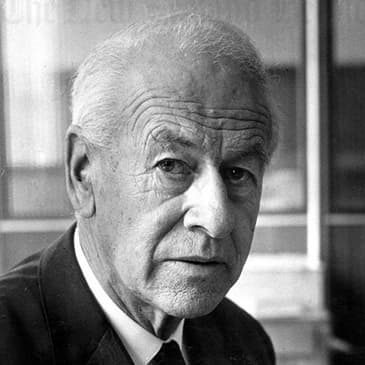
[00:00:00] Hello listeners, welcome to my podcast. We will continue from yesterday, Acts, a Commentary, by Professor E. M. Blaiklock, M.A. We are delighted to recommence from Galatia again, the bottom of page 119 and Acts 21, verses 1 to 5.
[00:00:20] The region of earlier evangelization was beckoning, and Paul and Silas left the coastal plain and made for the high country by the only route which crossed the Taurus range, the famous Cilician Gates, through which Alexander had marched to conquer the vast Persian Empire four centuries before.
[00:00:40] The narrative still appears to hurry, either because Paul did not regard this second visit as worthy of detailed report, or because Luke himself chooses to hasten on to the momentous events of the European ministry and the visit to Philippi. One event, however, delays the narrative, the call of Timothy, who takes up the youthful ministry relinquished by John Mark.
[00:01:05] Derby and Lystra, verse 1, were a single administrative region, and the latter town appears to have been Timothy's birthplace, 5-2. Geographically, Lystra is linked with Iconium, verse 2, in spite of the administrative grouping, and Paul appears to have taken note of Timothy's reputation in the whole district.
[00:01:28] The preoccupation with character in those who assume Christian leadership is a marked feature of the story of the early church, Acts 6, verse 3, Acts 10, verse 22, Acts 22, verse 12. The visit to Lystra and Derby was a private affair. He, of verse 1, becomes they, of verse 4. Verses 3 and 4 raise a difficult question. Why did Paul circumcise the young Hellenistic Jew?
[00:01:57] The action is certainly indicative of his concern at this stage, not in any way to offend the susceptibilities of the Jews, whose colonies were grouped along the intended route through Pisidian, Antioch, and Iconium. The right, Bruce suggests, may have been to legitimatize Timothy in Jewish eyes, otherwise he would rank as a Gentile. Why even this should matter is a question without obvious answer consistent with Paul's position.
[00:02:26] At any rate, Luke sees fit to mention in juxtaposition the circumcision of Timothy and the faithful publication of the Jerusalem decree. Why are these details stressed? No doubt because of the later situation in Galatia, known to Luke at the time of writing, where Jewish action was such that Paul felt absolved from any further obligation to publish or enforce the decisions of the Jerusalem elders.
[00:02:53] Certain it is that the advice to the Corinthians on meat offered to idols strains the decree to the utmost. It appears that hard on Paul's heels came missionaries of the Judaizing party. Their action must have made him bitterly regret the second mile of well-meaning compromise he had gone in the matter of Timothy. Picking on his action, they claimed that he preached circumcision .
[00:03:22] Paul, Rackham points out, enters so fully into the question of Titus' circumcision , because he is at the same time defending his action with Timothy. He must, nonetheless, have bitterly regretted such a need for defense, and Ramsey's comment may not be unjust. No act of Paul's whole life, he writes, is more difficult to sympathize with, none cost him dearer.
[00:03:52] It is easier to be wise after the event, and the future history of Galatia belongs rather to the exposition of the vehement epistle to the Galatians than to Luke's account of the second missionary journey. Let it suffice to point out in conclusion how vital the area was to Paul's whole ministry. If these churches, writes Ramsey, his first foundations towards West, were to pass under the party of slavery, his work ruined at its inception.
[00:04:22] The blow to his policy and influence was ruinous. How near such disaster came, the situation visible some little time later was to show. Paul, at least, had done his utmost to conserve his work. He had acted honorably and faithfully. If he also acted unwisely in the matter of Timothy, the unwisdom sprang from a generous heart, willingness to conciliate and please, which found scant response in those who became his enemies.
[00:04:51] Thanks for listening. We will continue tomorrow. We will continue to see you tomorrow.