
In today’s fast-paced media landscape, truth and integrity remain essential, especially for journalists who are Christians. But with today’s divisive narratives, how can believers step into mainstream media with a commitment to honesty and faith?
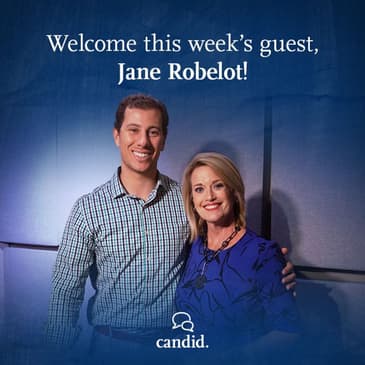
Join Jonathan Youssef on Candid Conversations as he welcomes award-winning journalist and news anchor Jane Robelot. With a distinguished career that has included co-anchoring CBS’s morning show and hosting several of Leading The Way’s media programs, Jane offers a unique perspective on living out her Christian faith in a challenging industry.
In this timely conversation, Jane shares her powerful testimony, emphasizing the importance of unbiased journalism and encouraging young Christians to be salt and light—even within mainstream media.
For questions or to connect with the Candid community, visit LTW.org/Candid.
Follow us on social media:
- Facebook: @candidpod
- Instagram: @candidpod
- Twitter: @thecandidpod
For more original podcasts from Leading The Way, please visit ltw.org/subscriptions
[00:00:02] I am not defined by my business card. Whatever that title is doesn't mean that that's who you are. It's just where you work. It's where God has placed you right now. That's not what it should say on your tombstone. So I've really carried that with me to say to him, it's all from you.
[00:00:20] That's former CBS Morning Show co-anchor Jane Robelot. She's my guest on today's podcast.
[00:00:27] Hello and welcome to Candid, where we never settle for less than the truth. I'm your host Jonathan Youssef and each week we're going to tackle tough issues. We're going to answer your hard questions and we're going to take a candid look at the Christian faith.
[00:00:42] But first I have an important question for you. In today's loud social media culture, I wonder if you ever feel like you are just caught in a storm of competing ideas and you're unsure of how to discern
[00:00:56] what is true from what is not. Well, this week's free download, Truth Tips, will help by addressing six of the most common false beliefs that are infiltrating our culture today and how to confront them.
[00:01:11] It will also equip you with four questions you can ask yourself to help uncover truth in today's world. So head on over to ltw.org slash candid to get your free download.
[00:01:24] Now I'm very excited to introduce you to our guest today, someone I have known for a very long time and it is a great honor of working with Jane Robelot. Jane is an award-winning journalist who has worked in local, regional and national broadcast news.
[00:01:43] You hear her as the co-host of Leading the Way's daily program and the special co-host on Leading the Way television specials. Most notably, Jane is a passionate follower of Christ and a dear friend.
[00:01:56] Jane, thank you for joining us on Candid. I know you have a busy schedule as a news anchor and with all the things that are keeping your life busy and so we're blessed to have you today. Thank you for joining us.
[00:02:07] What a joy, Jonathan. It's fun to sit on this side of the microphone, first of all, but second, just to have an opportunity to visit with you. You and Lindsay are so dear.
[00:02:14] Oh, absolutely.
[00:02:15] And it's just wonderful. It's always great to hear you preaching. It's great to connect with you, but this is just a real special thing and I think Candid is such a great idea.
[00:02:24] Yeah.
[00:02:24] So thank you for having me as a guest.
[00:02:25] Well, I have big shoes to fill in some sense because I've always marveled at how wonderful you handle interviews, but obviously you've had a lifetime of this.
[00:02:34] If you could share a little bit about your professional background for our listeners who may not know the whole story, they may know you as Leading the Way host and some of those roles, but sort of walk us through some of those things.
[00:02:46] Why did you get into journalism? I know that you were at quite high levels at different points in your career. So just kind of paint a little bit of that picture for us.
[00:02:55] Sure. Yeah, good background because I can honestly tell you that my entire career has been spirit led.
[00:03:01] I've applied for a lot of jobs that I've gotten turned down for. The best jobs that I've ever gotten have been the ones that came to me, including Leading the Way.
[00:03:09] I think I just always was interested in news. We always were watching the news in our household and my parents would talk about events in the news.
[00:03:17] So I was very interested in history and current events. Then went to Clemson University.
[00:03:21] Ra?
[00:03:22] Boo.
[00:03:22] The other Tigers?
[00:03:23] The other Tigers.
[00:03:53] Making those connections and those people were all very encouraging about media and journalism. So a lot of seeds were planted then.
[00:04:00] Ended up getting a great job in local radio in my hometown, which is always a good place to start because you don't have to learn the name of the mayor and the governor. You know all that. You just have to learn broadcasting.
[00:04:10] Then got into television again in my hometown in Greenville, South Carolina.
[00:04:15] And then after seven years there, I got a call. There's a quick spiritual story there I'll throw out because everything in my life – talk about suffering, I was not.
[00:04:25] This was a pinnacle in my life. I was 29 years old. I had just signed a new contract with the station as their lead anchor, anchoring the 6 and 11 p.m. news.
[00:04:33] They liked me. I liked them. My parents lived in town. I'm in my hometown. Everything was great in my life.
[00:04:40] And suddenly, one night suddenly, God just drove me to my face on the floor. I don't know where it came from.
[00:04:49] Dr. Youssef talks about a divine discontent, and that's what was happening in me.
[00:04:53] For something came over me. I was divinely discontent.
[00:04:57] And I kept saying to the Lord, what is it? What do you want? What do you want?
[00:05:02] And I was literally prostrate on the floor, crying.
[00:05:06] Lord, what do you want?
[00:05:08] And I didn't hear an audible voice, but I felt him saying to me, give me broadcasting.
[00:05:14] It has become your God. Give it to me.
[00:05:18] And I said, but Lord, it's all I've ever really wanted to do, and you're the one that led me into this.
[00:05:24] Give it to me.
[00:05:26] So through tears, I will tell you honestly, my heart goes out to missionaries.
[00:05:30] They do such an incredible job.
[00:05:32] And I had asked the Lord in an honest way all through college,
[00:05:36] Lord, I want to do whatever you want me to do, but please don't make me be a missionary to China.
[00:05:41] Couldn't think of anything harder.
[00:05:42] I found myself saying out loud to him, okay, I'll even be a missionary to China.
[00:05:47] Whatever you want to do with me, do it, because I can't stand this discontent.
[00:05:52] Once I gave it to him, yeah.
[00:05:55] Clarify that.
[00:05:56] What did that mean to give it to him?
[00:06:00] That's a great question.
[00:06:01] It had to come from someplace really, really deep, because the whole battle was coming from someplace really, really deep.
[00:06:07] I think about Jacob wrestling with the Lord.
[00:06:09] It kind of came out of nowhere.
[00:06:12] And the same with me.
[00:06:13] So I had to really reach down deep inside of who is Jane?
[00:06:17] What are her priorities?
[00:06:19] How does she identify herself?
[00:06:22] And I suppose that the Lord understood that my priorities had become my job.
[00:06:30] And in the world's eyes, there's nothing wrong with that.
[00:06:33] And that how I identified myself became what it said on that business card.
[00:06:37] You know?
[00:06:38] I don't really want to admit that.
[00:06:40] But he did.
[00:06:41] And so when I felt his foot on my back, it came from someplace super deep where you have to really be honest with yourself.
[00:06:48] And that's not an easy thing to do sometimes.
[00:06:51] So to give it to him also meant going to a deep place, to reach in for it, pull it up, acknowledge what it is, and then put it down.
[00:06:59] Understanding that when I wake up tomorrow morning, he could take it.
[00:07:03] If he wants to or not.
[00:07:04] But if I give it to him, it's a whole lot better.
[00:07:06] Yeah.
[00:07:07] You all right?
[00:07:07] Than being stripped.
[00:07:08] Than being stripped.
[00:07:09] Yeah.
[00:07:09] Because I've been in that place, too.
[00:07:11] Fell asleep, restlessly, but at some sort of peace, really wondering what he's going to do with me now.
[00:07:19] And the next morning, the phone rang about 10.
[00:07:21] I was working night, so I didn't answer for a while.
[00:07:24] Pressed the button on the old-fashioned answering machine about an hour later.
[00:07:27] And there was a voice telling me, with a very lovely New York City accent, telling me that she was the executive assistant for the president of all CBS-owned and operated television stations.
[00:07:40] That they had been watching my work for the past year and a half, and they felt like I was ready to come and work for a CBS-owned and operated station.
[00:07:48] And you were 29?
[00:07:50] 29.
[00:07:50] Wow.
[00:07:51] And I had never, I mean, I can honestly tell you, I would never have dared to send a resume to one of the top four markets in the country owned by CBS.
[00:08:00] Right.
[00:08:00] And yet here it was.
[00:08:01] I literally fell to the floor laughing.
[00:08:04] And I said, Lord, this is just hilarious.
[00:08:07] He knew that he wanted to give me this gift, Jonathan, but he also knew that if he had given it to me without my giving him broadcasting first, I would have claimed that.
[00:08:16] Yes.
[00:08:17] I would have said, look what I've earned.
[00:08:19] Yeah.
[00:08:19] Instead of, Lord, in your mercy, you have gifted me with this amazing opportunity.
[00:08:25] He made it so clear that it was his.
[00:08:27] Was there ever a moment in that phone call, that conversation, where you thought, this is because of me?
[00:08:35] No.
[00:08:35] Or was it because that night before?
[00:08:37] Oh, yeah.
[00:08:37] I mean, it was so fresh in your mind.
[00:08:39] I can promise you.
[00:08:45] Looking back on it, that I would have thought, well, aren't I so talented?
[00:08:49] I would have.
[00:08:51] But he made sure that I knew the next morning this was just from him.
[00:08:56] And honestly, from that moment on, that was a great lesson that I've just constantly realized.
[00:09:00] I am not defined by my business card.
[00:09:03] Whatever that title is does not, if you're in a great position to steal some impressive stationery from your place, right, doesn't mean that that's who you are.
[00:09:12] It's just where you work.
[00:09:13] It's where God has placed you right now.
[00:09:15] That's not what it should say on your tombstone.
[00:09:17] So I've really carried that with me to say to him, it's all from you.
[00:09:22] So I went to work in Philadelphia, fourth largest market in the country, wonderful town, loved those people, was there about five years.
[00:09:29] And the station was owned by CBS, and that was when they were making a bunch of changes.
[00:09:33] NBC and CBS were switching stations.
[00:09:36] The man who had found me and discovered me, Eric Ober, had since become the president of CBS News.
[00:09:41] So Eric was able to bring me up to New York to anchor the 530 AM show for CBS News in New York City, Manhattan.
[00:09:49] Dream come true.
[00:09:51] Really professional dream come true.
[00:09:53] And about a year and a half after that, they made me CBS This Morning co-anchor along with Jose Diaz-Balart and Mark McEwen.
[00:10:03] And, I mean, that was the pinnacle.
[00:10:04] I would never have dreamed of even asking God for a position like that.
[00:10:09] But every day, walking down that hallway, I made sure to commit every day to him.
[00:10:13] I acknowledged every day walking down that hallway, Lord, I wouldn't be here if you didn't want me to be here.
[00:10:17] Don't let me get in the way of whatever work that you want to accomplish.
[00:10:21] I'm sure there were many days that I was not a real shining star for him.
[00:10:26] I'm sure there were days where my salt and light were not adequate.
[00:10:29] But I can tell you that every day it was right there on the top of my mind.
[00:10:33] The only reason I'm here is because this is where you want me to be, Lord.
[00:10:37] Okay, so you have that perspective of you're there because of him for whatever purpose that he's working that out to be.
[00:10:47] What are some of the challenges that you then faced within that sort of media sphere?
[00:10:52] Because I can only imagine they were pretty not so few and far between.
[00:10:57] Yeah, it took a while to find a good church in New York.
[00:11:00] But there are several that are really on fire for the Lord.
[00:11:02] That became a great foundation for me, you know, to launch from every day.
[00:11:07] And there were also a number of Christians just find each other.
[00:11:11] We just see each other.
[00:11:13] And so there were a number of Christian colleagues that we would just get together and pray together each day.
[00:11:20] Or somebody, you know, we would call and say, get together in so-and-so's office because something had gone wrong.
[00:11:24] And we would just hold hands and shore each other up.
[00:11:26] I can honestly say, though, and I might need to go back and look through my diary to be sure this is true, but I don't believe that I ever really felt any opposition because of my faith.
[00:11:40] At that time, CBS was very respectful of the fact that I was a born-again Christian because there are plenty of cultural Christians as well.
[00:11:50] But they all knew what my faith walk was.
[00:11:52] And even though many may not have agreed or shared that, they respected where I came from.
[00:11:59] I don't think that I really faced any dilemmas because of my faith.
[00:12:03] And again, there's a wonderful thing about broadcasting then.
[00:12:08] I'm not in that environment now at the network level now, so it may have changed.
[00:12:13] But broadcast news, journalism, is all about telling the truth.
[00:12:17] It's about fact-finding and telling the truth.
[00:12:19] And that's who Christ is.
[00:12:21] Christ is truth.
[00:12:22] So when you're going after a story, that's my only objective.
[00:12:26] I don't have an agenda.
[00:12:27] My agenda is to seek the truth.
[00:12:29] And I also know that there are always two sides to every story or a second perspective, perhaps.
[00:12:35] So I didn't really find much conflict being a Christian in journalism.
[00:12:39] I don't know that my colleagues at the network level can say that today.
[00:12:45] I don't know.
[00:12:46] But that was my experience.
[00:12:47] And it's my experience.
[00:12:48] I'm back in local news now.
[00:12:50] And that is my experience in my newsroom.
[00:12:52] There's a great respect for truth and integrity in broadcasting.
[00:12:57] And so it's not an issue at all, my faith.
[00:13:01] You've already touched on a few of these things.
[00:13:03] But what would be sort of your advice for maybe the younger person who's getting into that media field or contemplating going into that field?
[00:13:11] What would be some of your advice to them today?
[00:13:14] Do it.
[00:13:14] Go.
[00:13:15] We need believers.
[00:13:17] Because I have had some young people say to me, you know, my Christian faith is really, really important to me.
[00:13:22] And I'm kind of afraid to get into secular media.
[00:13:25] I'm like, well, no, that's exactly where you need to be.
[00:13:27] You need to be light and salt wherever you are, whatever you do.
[00:13:31] And if Christians just cluster up in Christian groups, then who's going to be light and salt to these people over here?
[00:13:37] We definitely need that.
[00:13:39] Also, just for broadcasting, for the sake of broadcasting, we need people whose faith base says tell truth, seek truth, be just.
[00:13:48] And that's all you'll ever be required to do.
[00:13:51] And if you're required to do more, if you're required to tell a story from a certain perspective or with a certain agenda or the certain bent, that is not honest journalism.
[00:14:02] Leave and go find another place where you can do honest journalism, even in a secular setting.
[00:14:07] I do believe those places still exist.
[00:14:10] But, yes, you need to go there.
[00:14:11] And when you go there, you need to hang tight to your faith.
[00:14:14] And you need to have those go-to people that we were talking about earlier who can hold you accountable.
[00:14:19] It's very easy to start, as we say, believing your own press.
[00:14:23] When you're doing well and everybody wants to pat you on the back and the ratings are up and people recognize you in the grocery store and all those seem so exciting and glamorous.
[00:14:33] It's easy to fall into believing that's who you are.
[00:14:36] That's not who you are.
[00:14:36] It's just what you do.
[00:14:38] It's what you do.
[00:14:39] And you need to be light and salt every day in that place where you do what you do.
[00:14:46] Those great words.
[00:14:47] You know, there's a lot of sort of social media platforms.
[00:14:52] How can Christians use that platform and those things that are there at our disposal?
[00:14:58] How can they use that to impact our world for Christ?
[00:15:02] What are some of the – would you have any sort of tips or hints or even experiences or stories that you could share from that?
[00:15:09] Absolutely.
[00:15:10] Well, first of all, I think that that's something that leading the way really does well.
[00:15:14] This ministry is always understood, and I think it was Dr. Yousaf's vision in the very beginning,
[00:15:19] that we need to use all kinds of technology to reach people.
[00:15:22] You're going to find them on some latitude and longitude somewhere.
[00:15:26] And so, yes, those platforms are out there for us to take advantage of just as much as for a marketer,
[00:15:34] people selling whatever they're selling.
[00:15:35] But always be aware.
[00:15:37] I mean, it's what we tell our children growing up.
[00:15:40] Everything that you write there, you will be judged by.
[00:15:43] And it doesn't go away.
[00:15:45] It might – you know, they might say, oh, as soon as you put this up on this particular app, it disappears.
[00:15:50] No, it does not.
[00:15:51] That's right.
[00:15:52] Yes.
[00:15:52] These forensics can find anything.
[00:15:54] So always, always, always be mindful that you are a witness.
[00:15:58] You're either a good one or a bad one.
[00:16:00] But you are a witness with everything you post on social media, just as you are with every word that comes out of your mouth.
[00:16:06] And I would say, too, that there's so much aggression on social media now.
[00:16:11] Everybody wants to have their say about who's right or wrong in politics and who's stupid and who's not or what fashion is good.
[00:16:17] Be loving.
[00:16:18] Be gracious.
[00:16:19] I think we can use social media as a place to let people have a little drink of water and a little space of grace when they come to our place.
[00:16:27] I like to put Bible verses up.
[00:16:28] I like to put little devotionals that I see.
[00:16:31] And it's amazing to me how many people will respond by saying, wait, where did you get that devotional?
[00:16:37] Thank you.
[00:16:37] That's exactly what I needed to hear today.
[00:16:39] So I would say if it touches your heart, it's going to touch somebody else's heart.
[00:16:44] Ask the Lord, what do people need to hear from me today or read from me today?
[00:16:48] And also be very careful about what you put out there that might be negative, that might be ugly, that might be judgmental.
[00:16:54] I'm glad you said the sort of the grace and the love aspect because how many times when I do venture onto social media and I'll see a post by somebody and I think, gosh, how hateful.
[00:17:04] And then I'll look up and it'll be from someone who's a preacher in a town or something.
[00:17:08] And I think, or it'll say Christ follower.
[00:17:10] And I just think, oh, I almost want to write back to them and say, like, delete, rethink.
[00:17:16] Exactly.
[00:17:16] I can't tell that you love Jesus by what you just wrote there.
[00:17:21] Exactly.
[00:17:22] Exactly.
[00:17:23] And we don't want that to be what people see.
[00:17:26] That's right.
[00:17:27] We don't want to remember us by.
[00:17:28] Exactly.
[00:17:29] And people who don't know the Lord, if they read that and they see that, oh, you love Christ and that's how you think, that really does turn them away from Jesus.
[00:17:38] You know, we wear his robe.
[00:17:40] That's right.
[00:17:40] We need to represent him all the time.
[00:17:43] And the next time they come across a Christian, they're going to say, well, I follow this one Christian person who says all these things and we have to kind of, you have to do the triage and kind of get them out of that.
[00:17:52] Triage is a great word.
[00:17:55] Okay.
[00:17:56] We're living in a time when so many people mistrust institutions.
[00:18:00] We mistrust media, education, religion, government, and we tend to put more trust into the opinions we receive from friends or celebrities on social media than we do the professionals.
[00:18:14] Jane, my question to you would be, can we trust the professionals in the media?
[00:18:19] Here I am asking a media person this question.
[00:18:21] But we think of this era of, you know, and I know this phrase is so cliche and overused at this point, but the whole concept of the fake news.
[00:18:29] And I know it's a reality, but my question to you would be, who do you trust?
[00:18:33] Who do you go to?
[00:18:34] Are there sources that you listen to to sort of – and how do you sort of differentiate between what's politically agenda-driven and what's actually factual information?
[00:18:46] That's a great question because it's harder today than ever before.
[00:18:50] Honestly, you used to be able to turn on any one of the major networks, and you could pretty much trust that whatever they said they had done their research on and that their sources were accurate.
[00:19:00] And I think – I don't really want to bash national media, but I will say that I feel like there is a great deal more editorializing in national media than there ever has been before.
[00:19:16] And that's what causes a great number of people to lose faith in them, to not be able to trust that what they're giving you is actually just the facts and not just the facts colored by what my opinion of the facts are or should be.
[00:19:31] Is the concept that you report the facts, and it's up for the individual to then interpret it their own – you know, because we're human beings.
[00:19:40] Absolutely.
[00:19:40] We have opinions and views, and we've all been – we all wear different colored lenses.
[00:19:45] But that's the main thing.
[00:19:46] In fact, you know, my wife obviously has journalism background, and she said the first thing they taught us day one in journalism school was remove your bias as much as possible.
[00:19:56] But today it just – it seems like no one's doing that.
[00:20:00] Exactly, Jonathan.
[00:20:01] It feels like they're feeding their bias.
[00:20:03] And then they all get together on one particular network, and they just feed on each other.
[00:20:07] And the problem is, too, a lot of where do I get my news?
[00:20:11] Who do I trust?
[00:20:13] I pay attention to who your sources are.
[00:20:15] Who are your sources?
[00:20:16] Is your source some person I've never heard of before?
[00:20:19] Is your source somebody you won't name?
[00:20:21] It used to be in journalism that you had to have three unnamed sources for every named source, right?
[00:20:29] Three anonymous sources only equals one named source.
[00:20:34] How credible are your sources?
[00:20:36] Where did you get your sources?
[00:20:37] How carefully did you weigh them?
[00:20:39] And did you make an effort to find a broad range of sources?
[00:20:44] Or did you just kind of go to one?
[00:20:46] Exactly.
[00:20:46] And I just – that's where I feel like they're falling down.
[00:20:49] I feel like they're only calling on sources that are going to parrot out what they want their particular – you know, how they want their particular view to be expressed.
[00:20:57] It's tough.
[00:20:58] I would say to people, don't give up on news.
[00:21:00] Don't give up on it.
[00:21:01] Keep watching.
[00:21:02] This is where local news is coming on strong.
[00:21:05] I really feel like most of the time, local news does not necessarily try to take on those editorial positions.
[00:21:13] They just tell you what's going on in your local town without giving you a whole lot of opinion.
[00:21:19] But listen to both.
[00:21:20] If you feel one network television is a little bit more bent to the left and one is bent more to the right, watch them both.
[00:21:27] Watch them both.
[00:21:28] Try to force yourself to watch 10 minutes of this one and 10 minutes of that one because the truth is somewhere in the middle.
[00:21:35] Yeah.
[00:21:35] Okay.
[00:21:36] So at the root of all this, what's at play?
[00:21:38] What's causing this all of a sudden, this sort of jockeying political agendas?
[00:21:45] Wow.
[00:21:46] And you may not know.
[00:21:47] I don't.
[00:21:47] But I would be willing to guess when you know when something bad happens, you have to kind of look at what's going on when that thing happened.
[00:21:55] What led up to that thing?
[00:21:56] What led up to World War II?
[00:21:58] You know, who got shot that led up to World War I?
[00:22:01] You love history.
[00:22:03] You look to Serbia to look to World War I.
[00:22:06] Then you look at the Treaty of Versailles to look to what might have led up to World War II.
[00:22:10] What led up to this bizarre war that we're seeing now in media?
[00:22:15] And I think it's kind of the advent of social media.
[00:22:18] People on social media, instead of just showing pictures of their children and grandchildren and wedding photos, started talking about political things.
[00:22:26] And we do know, too, that Russia is at least one country that has had some influence on our social media.
[00:22:35] Sure.
[00:22:36] For whatever, whoever let that dog in, we're still looking to see.
[00:22:41] But we do know that Russia understood that they could influence the temperature in America by setting up fake accounts and putting up really disturbing posts and trying to polarize people.
[00:22:52] And we followed right along with that.
[00:22:55] So I have a feeling that social media would be maybe what led us into a less unbiased media, paid media, mainstream media.
[00:23:08] But at the root, it seems to be, I mean, power seems to be the sort of the key thing, I think.
[00:23:14] Oh, yeah.
[00:23:15] You know, whose candidate is in office?
[00:23:18] Whose position is more?
[00:23:20] Or, you know, obviously gun control is becoming an issue that, I mean, even internationally is becoming an issue for America.
[00:23:28] And so it's about getting your narrative.
[00:23:31] So every time something happens, there's a particular narrative from both sides.
[00:23:35] And then the war takes place, like you said, on the social media platform.
[00:23:39] And then it ends up in the larger media scale as well.
[00:23:41] And it's like that about every issue.
[00:23:44] And don't you wonder, too, I mean, there are brilliant political minds
[00:23:48] who know how to market their candidates, Republican, Democrat, Independent, etc.
[00:23:54] And would they not be foolish to not be using social media in some way to get their agenda out,
[00:24:00] to get their candidates' agenda out?
[00:24:02] So I don't know how much of it is driven by that as well, kind of a marketing of ideas, if you will.
[00:24:07] I do wonder, and maybe you can answer this, but sort of younger journalists that are getting into the field,
[00:24:14] do you think they're feeling that pressure to be biased, unbiased?
[00:24:19] What is sort of the – I don't know.
[00:24:22] I can honestly say, too, that the people that you and I – and I'm not going to – we don't want to name any names, of course.
[00:24:27] But if you and I sat down and we could name five people in national media that we felt were politically biased
[00:24:33] or had some agenda, might not even be a political agenda, some other kind of agenda,
[00:24:38] I can guarantee you that you could put those people on a lie detector test
[00:24:42] and they could pass it that they are not biased, that they do not carry an agenda.
[00:24:46] They see what we see as their bias, they see as truth.
[00:24:51] I really believe that.
[00:24:52] I don't think they wake up every day and go, hey, I'm going to carry water for this guy or this idea.
[00:24:57] It's not malicious.
[00:24:59] They genuinely believe that what this thing is that they're pushing for and promoting is truth.
[00:25:05] They think that's true.
[00:25:07] And it's worth sort of promoting or whatever.
[00:25:08] So I would have to say to young journalists, you know, make sure you're not all drinking from the same water fountain.
[00:25:14] Take a look at what's around you, what's culturally around you, and just ask yourself this question.
[00:25:19] What are my particular – acknowledge what your own biases are.
[00:25:23] We all bring them in.
[00:25:25] We all have our own biases.
[00:25:27] Acknowledge what those are.
[00:25:28] And then every day before you – or as you're working on that story, look at that and say,
[00:25:35] now, wait, am I only calling on this particular source for this information because that's what I want them to say?
[00:25:42] Have I looked carefully at the other guy who I don't necessarily acknowledge that, you know, I think he's the right guy?
[00:25:48] He said, acknowledge what your biases are and then make an effort to bypass those by searching out what the other side really is.
[00:25:57] You know, we talked about sort of different lenses, you know, or biases, however you want to call it.
[00:26:02] I mean, is there a – how does your Christian faith – what – are there sort of like gospel lenses that you put on when you were reporting the news or when you're consuming the news?
[00:26:14] Is there a sort of a filter that you have in terms of a Christian dynamic, a Christian perspective?
[00:26:23] In terms of interpreting what I hear?
[00:26:26] Interpreting what you're hearing.
[00:26:27] And even when you were in the broadcast field and even as you are now, is there a way – because you can't – I'm trying to think like there's really no way to separate Jane and Christian faith, right?
[00:26:40] That's just who you are.
[00:26:41] You gave that to him.
[00:26:42] Exactly.
[00:26:43] So how did that sort of play out in your career?
[00:26:46] Yeah, I think one thing with – that's – I don't want to call it a bias, but that's one part of who I am that I do acknowledge.
[00:26:55] And so I will always say to him, if there's a story that I feel my Christian viewpoint may influence, I have to really, really, really pray hard on that and say,
[00:27:07] Lord, help me find truth here and let this be a story that will be truthful.
[00:27:14] And in being truthful, that will be glorifying to you.
[00:27:17] You know?
[00:27:18] So even acknowledge my faith and not allow my faith to bias whatever the – however the story flows.
[00:27:27] Sure.
[00:27:37] Possibly.
[00:27:38] I mean, I'm giving an example.
[00:27:39] The first time – the one example that pops to my mind was when I was in Philadelphia, there was a big Right to Life march in Center City.
[00:27:47] And they sent me to cover that.
[00:27:49] And they had sent another reporter because we wanted to make sure that we gave equal time to both sides of that issue.
[00:27:55] We sent another reporter to cover pro-choice.
[00:27:59] It wasn't a rally that was going on.
[00:28:01] And we actually sought out a person who was promoting choice.
[00:28:04] Well, halfway through, that reporter got called up to cover something else.
[00:28:09] So they said, we've just got your story.
[00:28:11] So I had to make sure that I was covering this Right to Life march fairly.
[00:28:16] Not just what the Right to Life people were saying, which is what I personally believe in.
[00:28:21] Right.
[00:28:22] But I had to make sure that I was also telling the other side of the story.
[00:28:26] What do the pro-choice people have to say about this?
[00:28:30] So that was the one example that kind of came to my mind because, frankly, I was very happy to be on the pro-life.
[00:28:38] And I was really relieved that I only had to tell that part of the story.
[00:28:41] But journalistically and as a matter of just being honest with viewers so they can make their decisions, it's just important that the other voice be heard.
[00:28:50] Very, very important that I not be promoting either agenda from either group but just telling the standpoint that the pro-life and the pro-choice people each have.
[00:29:00] So that was the first time that I was really kind of consciously aware of, oh, darn.
[00:29:05] Oh, darn, I got to tell the other side.
[00:29:06] But I even think even that is honoring to your faith.
[00:29:10] It is because it's just truth.
[00:29:11] And oftentimes people don't want some faked up rendition of who God is.
[00:29:20] They want truth.
[00:29:21] And that's why I love to tell people when they're like, I'm mad at God right now.
[00:29:25] I don't want to pray right now.
[00:29:26] I'm not happy with him.
[00:29:27] I'm like, then tell him.
[00:29:28] God can handle it.
[00:29:29] He's really big.
[00:29:30] He can handle anything.
[00:29:32] Any question you throw at him, any perspective or point of view that you have that you bring to him, take it to him.
[00:29:38] Be honest with him.
[00:29:39] And so that's what I would say as journalists.
[00:29:41] Just be honest with what's out there.
[00:29:44] And people will hear and discern what they, you know, in a way that they should, how they should vote or how they should make that decision.
[00:29:54] Yeah, it's interesting.
[00:29:55] I remember hearing a lecture when we were in Australia and there was a young lady talking about how Facebook actually has these algorithms that sort of, they call them media bubbles.
[00:30:06] And so you're really only surrounded with voices that you kind of approve of and that you like.
[00:30:13] And so it kind of, I think it gives us a wrong interpretation of the world in which we live in.
[00:30:19] And then that's where all the vitriol comes in.
[00:30:21] And so you're constantly fighting against this enemy that you're not even really hearing from.
[00:30:25] And so you're only getting bits and pieces of the other side of the argument.
[00:30:29] And it just, to me, that just feels a bit one-sided and it's not honest.
[00:30:33] There's no integrity in it.
[00:30:34] Even if it's something we disagree with, you still want to know that perspective, even so that you can have that conversation, that dialogue with someone that has that viewpoint.
[00:30:44] Absolutely.
[00:30:44] And also, there may be something in that other viewpoint that you embrace.
[00:30:50] Or had not thought of.
[00:30:51] Exactly.
[00:30:51] Or that strengthens what it is that you already believe.
[00:30:55] I think it's very dangerous in our society for us to just circle up and live in our little bubbles and not even make an attempt to understand what other people believe and how they think.
[00:31:05] Yeah.
[00:31:05] Yeah, it's very dangerous.
[00:31:07] Yeah.
[00:31:07] Paul walks through Athens and he takes notice of all the monuments and the gods that they worship so that he can then witness to them.
[00:31:15] And say, here's the unknown God.
[00:31:16] That's right.
[00:31:16] Let me tell you about him.
[00:31:17] Yeah.
[00:31:18] Yeah.
[00:31:18] Exactly.
[00:31:19] But if Paul didn't understand that culturally.
[00:31:21] It would have been deaf ears.
[00:31:22] He would have completely missed out on that opportunity to bring so many people to the Lord.
[00:31:27] Yeah.
[00:31:27] Great example.
[00:31:28] Yeah.
[00:31:29] Well, it's been a privilege to have you on the program and to be connected through Leading the Way.
[00:31:35] And I do hope that people have appreciated the time that you have spent sharing with them.
[00:31:42] Well, I just want to thank you so much, Jonathan.
[00:31:44] First of all, our Jewish friends have a wonderful Yiddish word.
[00:31:48] It's called kavaling.
[00:31:49] I'm kavaling for you.
[00:31:50] And that means when you're so happy about something that it just spills over.
[00:31:54] It just bubbles forth.
[00:31:56] So I'm just kavaling for you and for Lindsay and for your beautiful son.
[00:32:00] Thank you.
[00:32:00] And for the ministry that you have with Church of the Apostles and Leading the Way.
[00:32:04] And it's just such a joy to sit and get to visit with you face to face.
[00:32:07] Yeah.
[00:32:08] And it's good to see you on the other side of the microphone, too, I think.
[00:32:10] You're always the one doing the interviewing.
[00:32:12] And I think people appreciate hearing your perspective.
[00:32:16] You know, when you're always the one asking the questions.
[00:32:18] Yeah.
[00:32:18] Well, it was my joy.
[00:32:18] People want to know what's going on in the head of that person.
[00:32:20] So.
[00:32:20] You had some good questions for me, too.
[00:32:22] And I appreciate that.
[00:32:23] You get an A+.
[00:32:24] I learned from the best.
[00:32:25] Thank you all for listening.
[00:32:27] Candid is a podcast of Leading the Way with Dr. Michael Youssef.
[00:32:30] If you have questions about today's episode, please share them with us at ltw.org slash candid.
[00:32:36] And if you'd like today's episode, please share it with a friend, leave a review, and subscribe.
[00:32:43] And maybe we'll have you back again soon and we can ask you more questions.
[00:32:47] I would love that.
[00:32:48] Hopefully from the audience here.
[00:32:50] I'm Jonathan Youssef and I hope to see you next week.
[00:32:53] Bye.
[00:32:53] Bye.