
Should Christians allow their children to trick-or-treat? Is Santa Claus ok? Are we free to send our children to public school? The list of debatable issues is endless - places where Biblical principles should be applied, but will every Christian apply them the same way?
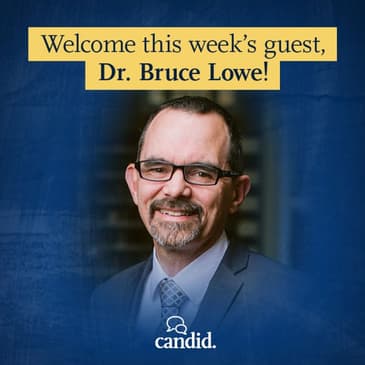
Join Jonathan Youssef and Dr. Bruce Lowe to explore the delicate balance between conviction and grace, navigate the complexities of disagreements within the Christian faith, and understand when to hold Christian beliefs with a closed hand and embrace Christian liberty.
Bruce Lowe is a scholar, author, and a favorite professor at Reformed Theological Seminary.
Please take a few minutes to settle in and listen to a thoughtful and inspiring Candid Conversation.
To ask Jonathan a question or connect with the Candid community, visit https://LTW.org/Candid
Facebook: https://www.facebook.com/candidpod
Instagram: https://www.instagram.com/candidpod
Twitter: https://twitter.com/thecandidpod
For more original podcasts from Leading The Way, please visit ltw.org/subscriptions
[00:00:00] We need to recognize as Christians that it is not a mature position to just come down
[00:00:09] on everything, like in a very black and white world.
[00:00:12] All answers are great and therefore if we let Scripture be our guide we have to agree
[00:00:18] that when it comes to complicated problems we must anticipate that the answer to those
[00:00:23] complicated problems are going to require nuances.
[00:00:32] Hello and welcome to Candid where we never settle for less than the truth.
[00:00:37] I'm your host Jonathan Youssef, each week we'll tackle tough issues, answer your hard questions
[00:00:43] and take a candid look at the Christian faith.
[00:00:46] Today we have a special repeat guest with us Dr. Bruce Lowe, a favorite seminary professor
[00:00:52] at Reformed Theological Seminary and a voice of biblical wisdom.
[00:00:57] Today we are discussing Christian Liberty and how to handle differing opinions within
[00:01:02] the Christian Church.
[00:01:04] Together we'll explore the delicate balance between conviction and grace, navigating the
[00:01:10] complexities of disagreements within the Christian faith and understanding when to hold
[00:01:16] our beliefs with a closed hand and when to embrace Christian Liberty.
[00:01:22] Settle in and prepare for a thoughtful and inspiring candid conversation.
[00:01:28] Today we're thinking about how isolated we can feel in Christian community, we feel the
[00:01:34] pressure to conform and we feel this need to align ourselves with people who only align
[00:01:43] with vast majority of our views.
[00:01:46] We don't have open channels of conversation with people who may disagree on big issues
[00:01:53] and small issues.
[00:01:54] We know that as Christians there are certain things we hold with a closed hand and
[00:01:58] there are many things we hold with open hands.
[00:02:02] This is issues of Christian Liberty.
[00:02:04] I've invited Bruce to come and help lead us through a conversation about Christian Liberty.
[00:02:09] Bruce, thank you so much for being with us again.
[00:02:12] I'm glad to be here, Jonathan.
[00:02:14] It's yours.
[00:02:15] Yeah.
[00:02:16] Well, thank you.
[00:02:17] You and I have been chatting some more about this before we got together and we both
[00:02:21] agree that this is a tricky subject.
[00:02:24] It just feels like there's lots of moving parts.
[00:02:27] That always makes for a difficult conversation.
[00:02:30] It's obvious that we know that truth matters.
[00:02:33] Because truth matters when we see error around about us, we start to wonder what extent
[00:02:38] I'm irresponsible to say into that space and have a voice into that space.
[00:02:43] And then we feel guilty sometimes that we haven't stepped into that space and said something,
[00:02:48] but other times we do step into that space and say something.
[00:02:51] Or we always step into that space.
[00:02:53] Right.
[00:02:54] That's right.
[00:02:55] Too much.
[00:02:56] And we get labeled as the person who steps into that space.
[00:02:58] Right.
[00:02:59] Exactly.
[00:03:00] And then we kind of double down the second guess.
[00:03:01] It was interesting that just yesterday a student came to me and said, I'm the person,
[00:03:06] I'm the kind of theological policeman and help me because I feel like I'm overstepping
[00:03:11] my bounds.
[00:03:12] Yeah.
[00:03:13] Exactly does this make sense.
[00:03:14] That's right on.
[00:03:15] This is exactly the topic.
[00:03:16] Well, and for those listening at home, if you're wondering specifically what we're talking
[00:03:20] about, I mean, this again as we said, it can range in topics.
[00:03:24] Rather, it can range in subject matter and issues that come up in your life.
[00:03:28] We've just finished the Reformation Halloween holiday.
[00:03:32] And I know that there's a lot of points of contention about whether you let your kids
[00:03:36] go out and trick or treat.
[00:03:38] And there seems to be a lot of images of demonic things and the raising of the dead and
[00:03:45] skeletons and all that sort of thing.
[00:03:46] So it's how much do you introduce your kids to culture?
[00:03:51] Do you balance that with the right biblical teaching or is it that you just let them
[00:03:56] be a part of it because it's just fun?
[00:03:58] And I've seen lots of friends who have become engaged in heavy debate just on that issue.
[00:04:03] And now that could continue on through the holidays.
[00:04:05] Do you do bunnies and eggs at Easter?
[00:04:08] Do you do Santa Claus at Christmas?
[00:04:10] And I know you'll probably cite this, but what schools do I send my kid to because people
[00:04:16] do want to step into that space.
[00:04:19] There might be a space for that.
[00:04:22] And so that's kind of just to kind of set the stage for us a little bit more firmly.
[00:04:26] These are the issues we're talking about.
[00:04:28] And I mean, if I could just even muddy the water even for you.
[00:04:31] When your children become teenagers and when they start to gain some agency at the point
[00:04:37] that when the young you are the agent, you are the one who, in a sense, dictates things.
[00:04:42] But what about when there's that transition happening there?
[00:04:45] If you're the person who's being that police officer for everybody else and you're doing
[00:04:50] that for your own kids, often I see that that's the same person who struggles to work
[00:04:55] out how to navigate it with your own children, to get them freedom and space.
[00:05:00] If things are kind of controlled right to the way they're going through it.
[00:05:04] When they leave and they go off to college then all of a sudden they're free and there
[00:05:08] can be a reaction against that agency of the parents.
[00:05:11] So this is huge.
[00:05:13] This delts into the dynamics of how you transition with your children in the ways that
[00:05:18] you know into those teenage years.
[00:05:21] So yeah, this is a huge topic.
[00:05:23] I reckon the best iron ramp is scripture and the best iron ramp is scripture not just
[00:05:29] read as an isolated proof text or even a proof chapter.
[00:05:34] But I would love to even kind of navigate into first Corinthians as an entire letter because
[00:05:40] what's so interesting about first Corinthians is that it contains many, many issues clear
[00:05:45] that the Corinthians divided over the question of marriage and singleness, divided over
[00:05:50] the question of food sacrifice to idols, divided over the question of head covering, over
[00:05:55] the Lord's supper, you know, they divided over spiritual gifts.
[00:05:59] So it's a congregation that's divided.
[00:06:01] Yes.
[00:06:02] Now Paul is therefore faced with this very question, how do I approach a congregation that's
[00:06:08] divided?
[00:06:09] And this is where we need to go back as readers and look at chapter one because what Paul
[00:06:14] does in the purpose statement of the letter actually is that he says that he wants them
[00:06:20] to be of one mind.
[00:06:22] And what he goes on to talk about is a complete chapter later, the idea of us having
[00:06:27] the mind of Christ.
[00:06:29] And so you know who knows this mind of a man except the spirit of a man that talks about
[00:06:33] how we have the mind of Christ.
[00:06:35] So we enter in the spirit.
[00:06:36] Yeah, that's right.
[00:06:37] Exactly.
[00:06:38] Yeah.
[00:06:39] So the possibility even of unity for Paul doesn't boil down to simply working out the right
[00:06:47] answer to every question.
[00:06:48] Yeah, there's room for disagreement.
[00:06:51] Exactly.
[00:06:52] But you still built into the unity in the body of Christ with the mind of Christ, you know,
[00:06:57] having the spirit.
[00:06:58] And I think that's such an important thing that I think we can so easily forget because
[00:07:02] we think we need to have the exact same view, take, conclusion on every single issue.
[00:07:10] And I think that's where we find our disagreement, our points of differences and which leads
[00:07:16] to argumentation and thinking, you know, this person's reprobate and needs to be cast
[00:07:21] out.
[00:07:22] You know, and that's not helpful.
[00:07:24] I think this is a fantastic start to the conversation in terms of laying that groundwork
[00:07:29] of where we're launching from.
[00:07:31] Yeah.
[00:07:32] And I think that there's some real practical stuff in first Corinthians that I would even
[00:07:36] love to talk about next.
[00:07:38] You know, that I think really do speak to this issue.
[00:07:41] How do you disagree?
[00:07:42] Like having a theology of disagreement as it were, knowing when I need to say stuff,
[00:07:48] when I shouldn't say stuff, when does my own responsibility or where does my own responsibility
[00:07:53] begin and end when it comes to other believers?
[00:07:57] Yeah.
[00:07:58] So I think that's huge.
[00:07:59] And I think we've got to speak to this very directly and say that the centerpiece of
[00:08:03] the entire discussion as it reaches its climax near the end of first Corinthians is
[00:08:07] first Corinthians 13.
[00:08:08] Yes.
[00:08:09] And then just about love.
[00:08:10] Yes.
[00:08:11] And then that can be hijacked by people.
[00:08:14] Yes.
[00:08:15] And therefore it can get blacklisted as a concept that love really matters.
[00:08:19] And so it's like, hey, if you don't let me live this kind of lifestyle.
[00:08:22] You don't love me.
[00:08:23] If it's a Christian, you don't love me.
[00:08:24] And therefore you're against first Corinthians 13.
[00:08:27] Exactly.
[00:08:28] So again, you know, it's so easy for a scripture to get hijacked.
[00:08:31] But let's give it an honest reading here and let's see that no, no, no, this is still
[00:08:35] the centerpiece and that Paul believes with all his heart that the only way the Corinthian
[00:08:41] problem is going to be solved.
[00:08:42] Yes.
[00:08:43] Because when people are filled with the Holy Spirit, which gives them the mind of Christ
[00:08:48] and when there's Christian maturity happening and then they're going to know where and when
[00:08:52] and how they they need to speak up and step in when they need to give freedom and leeway
[00:08:58] to their person.
[00:09:00] This is the only way that the solution is really going to come about when those things
[00:09:05] are happening.
[00:09:06] And yet Paul knows that he still has to deal with these controversies with people.
[00:09:11] So I think the beautiful thing about first Corinthians is that Paul is in one sense
[00:09:15] an idealist, that he believes in the ideal of the work of God and the possibility that
[00:09:21] the work of God is going to take place in the lives of Christians and they're going to
[00:09:25] become mature to the point where they're able to navigate together and for themselves
[00:09:31] and together as a church how to work through issues together.
[00:09:35] So he believes, I mean there's an optimism about first Corinthians that is just wonderful
[00:09:40] and it's an optimism where Paul does not believe that his own answers to their questions
[00:09:45] are actually the key to the questions themselves.
[00:09:47] Right.
[00:09:48] He believes that there's a deeper unity that is caused by God and that there's a deeper
[00:09:53] unity that when the Holy Spirit breeds the fruit of the Spirit which of course according
[00:09:58] to Galatians 5 starts with love that when true love is enacted then that will be the
[00:10:03] solution.
[00:10:04] And yet Paul is still willing to engage in those questions.
[00:10:08] So we kind of get a beautiful two bites of the cherry here, the ideal which would be
[00:10:13] good for us to come back to all the time and circling back into but we also then get
[00:10:18] the dynamics of Paul's actual dealing with key controversial topics of the day.
[00:10:23] They weren't the same controversy, they weren't the Halloween and the homeschooling
[00:10:28] and you know COVID masks and vaccines and all of those things.
[00:10:31] Right.
[00:10:32] So we're all different kinds of set of problems, they were their own set of problems.
[00:10:36] And we can definitely derive principles from those.
[00:10:38] Well, I think the person listening also needs to remember you know this isn't an episode
[00:10:42] to make you feel like oh I've done that and now I feel terrible but rather you know
[00:10:49] the Lord can use those things for his purposes in fact he says he will.
[00:10:54] And so it's not a thing where you need to feel like you need to be mistake free.
[00:10:59] You're still going to continue to step into things you shouldn't and not step into
[00:11:04] things you should.
[00:11:05] And that's going to continue on but the key I think is kind of what the portrait you've
[00:11:10] been painting for us which is a sense of what Paul talks about in terms of we're growing
[00:11:14] in maturity, we're growing in our wisdom and our love and as those things flourish and
[00:11:20] develop and grow then these issues become a little bit easier.
[00:11:24] Yes.
[00:11:25] They don't necessarily go away but I think the thought process becomes a little bit easier
[00:11:30] and hopefully the relational capacity between individuals and groups is on a better footing.
[00:11:36] So I just want to kind of add that caveat before we jump.
[00:11:39] Yeah, no I think that's great.
[00:11:41] Well you know look I mean just to jump one step further into first Corinthians.
[00:11:45] One of the things that I always tell my students when we start a study on first Corinthians
[00:11:49] is that Paul does not give childish answers to complicated problems.
[00:11:54] You know when you ask the question to jump into one example food sacrifice to idols,
[00:11:58] is it right for a Christian to go down to the market and buy a piece of meat that has
[00:12:04] been first of all sacrifice to idols.
[00:12:06] And honestly in the ancient world that would have been the case.
[00:12:08] You wouldn't want to waste your life of an animal.
[00:12:11] You know you could just slid its throat behind the shop, bring it out, drain it, bring
[00:12:15] it out and seal it.
[00:12:16] But why not have it sacrifice first and then you can kind of get some income from that process
[00:12:22] and then you get to use the meat later.
[00:12:24] So it's kind of, you know it's an economic thing that the meat at the meat market is going
[00:12:29] to be offered to idols probably.
[00:12:32] And so the question is well should I be eating this food that sacrifice to an idol as
[00:12:36] a Christian?
[00:12:37] You know as the food being tainted somehow and you can understand how some Christians
[00:12:42] were struggling with that and other Christians were okay with it.
[00:12:46] And there you go, you know they were right in the thick of a question.
[00:12:49] Paul's answer is never in any of these cases whether it be food, facts, sacrifice
[00:12:54] to idols, whether it be marriage, whether it be you know the Lord's supper or whatever
[00:12:59] it be.
[00:13:00] His answer is constantly yes but this yes but in some circumstances this in other circumstances
[00:13:08] that.
[00:13:09] And so if we're going to just present this as an overall statement we need to recognize
[00:13:14] as Christians that it is not a mature position to just come down on everything in a very
[00:13:22] black and white way.
[00:13:23] Yeah.
[00:13:24] Paul's answers are great and therefore if we let scripture be our guide we have to agree
[00:13:30] so when it comes to complicated problems we must anticipate that the answer to those
[00:13:35] complicated problems are going to require nuances.
[00:13:38] And what you're not saying is that there are doctrinal issues that are not black and
[00:13:42] white.
[00:13:43] We're very clear in other areas about you know the essentials of the faith.
[00:13:48] We're talking about what you said complicated issues which is our topic on Christian liberty
[00:13:53] or as you put it a theology of a disagreement I think that's probably what we're going to
[00:13:57] name this episode actually I love that so that's the nuance position that we're taking
[00:14:01] here.
[00:14:02] Exactly and that's the danger here again isn't the extremism that says oh you're saying
[00:14:07] that there's no truth and everything's relative not at all because like in 1 Corinthians
[00:14:13] 15 Paul is willing to say you know what when it comes to the resurrection if you don't
[00:14:17] believe in the resurrection of Christ then all is lost.
[00:14:21] So there's a very strong black and white statement being made there with reference to
[00:14:25] that and when you move into say the subject of the Lord's supper you know he's saying look
[00:14:30] there's a practicality here some people God's judgment is happening here in the community
[00:14:35] because of the way that you're doing this wrong yeah so he's not saying that there's
[00:14:39] no concrete absolutely not and none of us no one would ever say that.
[00:14:42] It's again it's only when we run to these kind of like desires of extremism.
[00:14:47] Yeah we're wanting to push that through an extreme as well now we're talking about complicated
[00:14:52] issues we're talking about non essentials yeah you know and having liberty in those
[00:14:57] moments okay but here's the catch though how does one distinguish between essentials and
[00:15:02] non essentials right because someone might be saying yeah but that example it feels like
[00:15:08] you need to have yes or no answer to it where do you draw the line on well this is a
[00:15:14] an essential this is a non-essential how do you you know sort of lay that out yeah yeah
[00:15:19] that's a great question look I think that this is such an important topic as well because
[00:15:25] I think for a lot of people everything would seem essential you know you can kind of trace
[00:15:30] a trajectory yeah that says okay if if I don't speak up to these Christian moms who I'm
[00:15:37] speaking to as a fellow mom and I don't strongly encourage them not to let the kids go trick
[00:15:43] or treating yeah then what's going to happen their kids are going to get into the occult
[00:15:48] and you know and so you kind of trace this trajectory yeah that then creates this massive weight
[00:15:54] on people and I think that you know and it can be very sincere yeah without a doubt you know
[00:16:01] I mean on a lot of church doctrinal issues that separate churches you know there can be this
[00:16:06] kind of idea that this is so important about obedience and God is a God of truth and therefore
[00:16:12] any truth that's kind of dumb down is going to be offensive and you know and so it's kind
[00:16:17] of this tracing of a trajectory so I would say the difficulty in all of this is that every Christian
[00:16:23] once we go down this track of kind of tracing the trajectory of implications yeah everything's
[00:16:30] essential everything becomes essential yeah and so I think we've got to stop doing that we've got
[00:16:35] to stop kind of saying okay what's the implications here and we've got to start with the core issue
[00:16:40] to start with yes so the core issue of does the Bible speak specifically or with strong principles
[00:16:49] to a particular issue yeah or doesn't it right and if it doesn't speak to it then what
[00:16:56] right do we have to kind of join certain dots that are sort of a bit you know yes yeah kind of
[00:17:02] to navigate into the importance of it again if we leave aside this idea of the trajectory
[00:17:07] of the one a leads to be necessarily leads to C and D and E like the the kids going into the occult
[00:17:13] right um if we leave that aside which I feel like is not a helpful route we then go back to the
[00:17:19] core issue itself and we need to ask the question is this core issue being spoken of in scripture or
[00:17:24] not now let me give you some examples of where there are some quite extraordinary things that could have
[00:17:31] been spoken about which don't receive attention and one is entertainment yeah in the ancient world
[00:17:37] entertainment was a big deal you know we have um the games and all of these kinds of things happening
[00:17:43] and the Bible just actually doesn't speak to them you know and Paul could have in many occasions or
[00:17:49] the New Testament authors in many occasions could have stopped and said you know what Christian
[00:17:54] shouldn't be wasting their time yeah you know going down to these games or you know there's certain
[00:17:58] blood sports and Christian shouldn't be doing this and doing it you know we need to realize that
[00:18:03] that they weren't living in a bubble that they were living in a society where these things were
[00:18:07] happening all around about all around them yeah and you know you could say things like well there
[00:18:11] was sexual practices taking place in some of these pagan festivals you know and often they were
[00:18:17] very public and again those things aren't even spoken about it seems like the Christians believe
[00:18:23] more and more as there's maturity in the heart yeah then the Holy Spirit is going to be able to
[00:18:28] guide people to know where and when and how to do certain things so they would go to be just
[00:18:33] super careful yeah to not speak to issues and make them essentials where the Bible doesn't make
[00:18:39] them a sense I think that is an extremely important point to be made I think you're right on with
[00:18:44] that and I think this is an important thing of understanding yourself so if you know you have a
[00:18:50] weakness or a proclivity towards something you know what the Spirit's not going to be telling you
[00:18:56] giving you the green light to go to something like that right but that's now within you as an
[00:19:01] individual and not a hard and fast rule that you have to create for everyone else that might not
[00:19:07] be an issue for someone else who can go and and have enjoyment and you know have opportunities for
[00:19:12] whatever so I think that's a really important sort of addition that we put in there for that I
[00:19:17] think that's helpful so where we have gone with this conversation here too is like we've kind of
[00:19:22] talked about the fact that Paul doesn't give baby answers yeah he doesn't give childish answers to
[00:19:27] complicated problems yeah and so I think the other thing to recognize is the dignity
[00:19:33] people who have different opinions see it's easy to have a judgmental spirit and to immediately
[00:19:38] think okay this person's being worldly this person doesn't care this person you know and again
[00:19:44] this happens with the kind of party spirit that's happening today you know you come across a certain
[00:19:49] other Christian who might let's say have a certain view about the environment about global warming
[00:19:54] or something and then it's like okay it's immediately assumed in this kind of ad hominem art
[00:20:00] that because they believe that then they must believe this and believe that there's an immediately
[00:20:04] a suspicion about them we want to categorize people yeah right we want to put them in camps and
[00:20:10] categories their liberal their woke their that's right fill in the blank and honestly it's because
[00:20:15] we're lazy we're lazy in our thinking yeah it's easier quite frankly to just write someone off
[00:20:22] yeah and to say I don't want to deal with that issue you know yeah we feel also like if we have
[00:20:26] been drawn into that area into that space where we have to wrestle like Paul does I'll repeat
[00:20:31] it again yeah yeah we has to wrestle through the nuances of things then we feel in danger we feel
[00:20:38] kind of wrong footed it feels much safer to stay within our camp yeah to stay within our fixed
[00:20:43] boundary of position yeah and the actual active engagement and the fear that we might come to a
[00:20:49] nuanced position now I can cause conscience issues for people yeah you know Paul says well okay
[00:20:55] there's nothing wrong with the meat sacrifice to an idol and he's kind of presenting a fairly
[00:21:00] reasonable position he's like saying you know it's meat right it's a it's a thing the idol is nothing
[00:21:06] yeah the idol is nothing it's a block of wood you have a piece of meat or a block of you know
[00:21:10] whatever the material is and you have the meat and so be it the meat you know it's a physical object
[00:21:16] it can't be tainted and so it shouldn't be a problem but if your brother whose conscience is weak
[00:21:24] on the issue thinks there's a problem yeah then you need to take your brother into account now there's
[00:21:30] something that needs to be said here very very important that danger that Paul isn't recognizing
[00:21:35] is that if by eating you lead your brother to go against his or her conscience yeah and resist it
[00:21:41] yeah he's or her conscience and to then do what's against their conscience in other words
[00:21:46] to lead them to say well I don't know if I should be doing this and I don't know that God's
[00:21:51] pleased with this but I'm going to do it anyway then that's where sin is actually you're sitting
[00:21:55] because you're you're kind of saying I don't really care what God thinks about this right so this
[00:22:00] needs to be spoken of I think this needs to be made very clear yeah there are a lot of
[00:22:04] circumstances where the person who disagree with you is never going to be drawn into your
[00:22:11] behavior pattern it's not because they have a conscience issue it's actually because they have a
[00:22:15] very strong opinion about it yeah so let's say uh drinking alcohol for example yeah let's say
[00:22:20] you're in a meal with somebody and they have very strong opinions that they shouldn't drink alcohol
[00:22:27] then impose that upon other people right if you then order alcohol you say well that person could
[00:22:32] come back and say well you are going against first Corinthians because you uh but the answer is no
[00:22:37] no I'm actually not making you stumble because you're not going to order a beer because I order
[00:22:43] order a beer right in fact you're going to be mad that I order a beer potentially and so I think
[00:22:48] we've got a differentiator this again this this passage is about the person who's struggling
[00:22:53] and it's about the act of love yes in not wanting to them to stumble yes so if we're looking outside
[00:22:59] of ourselves and we're constantly thinking how can I keep from drawing somebody out of outside
[00:23:06] of where their conscience allows them to be those are the principles that are work here
[00:23:11] and again it's a very different situation from this party spirit and this kind of clashing
[00:23:15] yeah of ideas now if we carry on that discussion just a little bit further Paul then goes on to
[00:23:22] the question of what about participating in an idle feast you know and he goes now hang on that's
[00:23:28] a different situation right because now you've got a religious ceremony right and now you've got
[00:23:33] the worship of demons etc etc and he kind of says no you shouldn't do that so his answer is very
[00:23:39] nuanced and he's answer then even with non-Christians and nuance because he says if a non-Christian
[00:23:44] invites you to the house and you want to go um then you go and see even there's liberty there
[00:23:51] actually yeah right go right and he says when you go and if someone raises an issue about oh this
[00:23:57] was that sacrifice to an idol should you be eating it he says don't eat it for conscience sake
[00:24:02] and he says not your conscience because you're totally free but for their conscience you don't have
[00:24:06] time and a meal to explain the nuances you know right yeah party atmosphere yeah that is like well
[00:24:12] hang on actually technically I'm allowed because what they're going to do is make a quick judgment
[00:24:16] on you and they're going to say okay clearly you have no regard for God and clearly you're kind of
[00:24:21] morphing into paganism here yeah what message are you going to send there so in that situation Paul
[00:24:27] says well actually you shouldn't do that so there are stipulations about right and wrong Paul is
[00:24:32] willing to navigate and he's willing to make judgment calls on certain things these judgment calls
[00:24:37] are incredibly nuanced and again if I could double back on this and say that our challenge here
[00:24:43] I think the first step is really recognizing that it is biblical to come to a nuanced position on
[00:24:49] things I think that a lot of people struggle because their conscience hasn't gone beyond the
[00:24:57] position of being able to have a nuanced position I think that they simply struggle to have that
[00:25:03] as a disposition and like I said some of it is a conscience issue feeling like if I go down this path
[00:25:10] if I actually dialogue with somebody who has a different opinion to me then I may compromise right
[00:25:16] and so it's a conscience issue but I also think to be frank it's a laziness issue it's a mental
[00:25:22] laziness issue there can be a laziness and I'm sorry to listen as if I'm being a little frank
[00:25:28] yet but being candid I'm being candid yeah that there can be a mental laziness that people aren't prepared
[00:25:35] to think through biblically what is and isn't allowed and what are some of the nuances and what
[00:25:40] are some biblical principles that can help or even just engage in the conversation with someone
[00:25:46] and to have that in a helpful manner but you're right we almost crave the black and white
[00:25:51] because it's simple and it's easy for me to know what I can and can't do and what I should be
[00:25:57] telling you know my fellow Christians what they can and can't do again on nuanced issues
[00:26:03] and the problem with this is that you can't run away and hide on the disengagement question
[00:26:08] because like if you've got kids then it's going to happen yeah as they try to navigate this
[00:26:13] yes the black and white if you don't help them to navigate those questions and you're not able
[00:26:17] to navigate those questions you're not actually positioned to help them and transition them
[00:26:22] towards adulthood yeah so this is no small issue the inability to to move beyond just a very simple
[00:26:30] simplistic way of thinking about issues yeah there's no small issue it's and I'll say it again
[00:26:35] the reason though for for those of us who are listening who are convinced that God has been
[00:26:40] pleased to give us so many precious gifts and one of the precious gifts being scripture itself
[00:26:44] that scripture is being given to us in its richness and its nuances and it's biblical it's a
[00:26:51] hundred percent biblical to look at first Corinthians and see that Paul is refusing to give simplistic
[00:26:56] baby childish answers yeah to complicated problems yeah yeah well and that was kind of the issue
[00:27:03] with the Corinthian church yeah they wanted the baby answer and there's where a lot of the
[00:27:07] differential was you know this group said yes this group said no what's the answer Paul and
[00:27:13] that's interesting that he does he comes into the gray area and says and yet your commonality
[00:27:18] again is not going to be on the solution or the answer to this particular nuance question it still
[00:27:24] goes back to your foundation in Christ in the spirit and the love that because of him you now hold
[00:27:30] with one another which I'm glad that you've come back circled back back around to that and I love
[00:27:34] there's something you said earlier that I wanted to write down because I think it's an important
[00:27:38] factor we need to think about and I think we often forget which is that we need to step outside of
[00:27:44] ourselves in a lot of these situations I remember talking with someone recently and I was telling them
[00:27:50] about a particular family and I could tell their immediate reaction was oh you know almost like
[00:27:57] why would they do that or why would they allow that in their family and then they said you know
[00:28:02] we don't know what's going on with that family you know we don't know what's going on inside
[00:28:07] the relationships and the dynamics so it was really kind of a great reminder to me that it's like
[00:28:13] we need to just just pause for a second and not jump to a conclusion you know they're out because
[00:28:19] they're making these terrible decisions but rather there's a reasoning behind what they're doing
[00:28:24] and then you know that's an opportunity to step in for ministry and not to hammer people with black
[00:28:30] and white but rather to help navigate some of the nuance things in a helpful way rather than you
[00:28:38] know to the student who came to you and said I like to police everything you know I think we're all
[00:28:44] easy to be police officers and calling things right and wrong yeah well where should we go from
[00:28:51] here this has been so helpful to me just even in my own you know thinking about just different
[00:28:58] situations that we face even from a church perspective and relationally and I think what
[00:29:06] might be helpful to add to this is the idea too of the diversity of the body which is a theme
[00:29:13] again in first Corinthians you know that one member of the body and now he's talking about spiritual
[00:29:17] gifts but there's a richness to the body isn't there there's a richness to who people are and
[00:29:24] this is the beautiful thing that the Lord doesn't just kind of collapse us all into the same sort
[00:29:29] of monochrome situation and that's a beautiful thing you know I mean you might have a person who
[00:29:37] just has an absolute love for nature for the environment for God's creation and they've read and
[00:29:45] they've thought about some of the implications for example of single use plastic to just kind of
[00:29:50] pick a subject here which I feel like is slightly less controversial in some of this but it
[00:29:56] made that may still be you know they say they're aware of the dynamics of what happens with when
[00:30:02] plastic bags wash in the ocean and you know fish and whales and bigger animals swallow them and die
[00:30:10] and you know so so some of these dynamics and they say you know what this is single use plastic these
[00:30:16] plastics don't buy it or grade and we want to do something about it now what does that Christian
[00:30:21] do they have strong convictions about this yeah what do they do with reference to other Christians
[00:30:28] do they decide that they're going to become the champion for this and again they they join the
[00:30:33] dots and they say every Christian should feel strongly about this because yeah this is God's creation
[00:30:38] we're talking about here and these are animals that God has made and we and Adam was and Eve were you
[00:30:44] know we're responsible in the garden to care for the garden so we should be looking after the
[00:30:48] the world which is all absolutely true by the way that's right and so they trace that that trajectory
[00:30:53] and they come to a very reasonable position that um you know a single use plastic is a bad idea
[00:31:01] yeah and maybe they decide that they're even going to petition you know certain restaurants
[00:31:06] certain locations they might even go to the government and petition them on this
[00:31:09] and and what do we say to that how do we respond to that the problem is that we feel like we've
[00:31:14] got to have an opinion on that and that person can also feel like we've got to agree with them
[00:31:20] or else and so all of a sudden it becomes this big issue between us why can't we just say that
[00:31:25] there's diversity in the body that person a has very strong views about petitioning the government
[00:31:32] with reference to abortion yeah person b has very strong views about petitioning the government when
[00:31:37] it comes to um the homeless and sex trafficking and single use plastic and and and what
[00:31:43] what what happens when all of those things start happening we can celebrate the diversity of
[00:31:48] the body and the conviction of people within the body and their own conviction of going out into
[00:31:54] the world yeah and making a difference and maybe maybe we we do interact with those people but we
[00:31:59] know feel guilty like that we're not joining that march with this particular thing and that person
[00:32:04] is not trying to make us feel guilty yeah so I think this kind of this idea of where does my own
[00:32:11] conviction lie yeah and and letting that dictate things so a passage besides first Corinthians
[00:32:18] eight to ten on the on the whole food sacrifice idols Romans 14 and 15 Paul deals with the question
[00:32:24] of certain convictions yeah and he says you know one man considers one day more important than
[00:32:30] another another man considers every day alike each one should be fully convinced in their own mind
[00:32:37] now the beautiful thing about that is Paul's not saying each one should dumb down their opinion
[00:32:41] right and not have a strong conviction right actually says it's okay you should be fully convinced
[00:32:46] in your mind so this is not about you know like being having no opinion at all on anything right
[00:32:51] so this is a neat thing again scripture teaches us he should be fully convinced in his own mind
[00:32:57] but then what should he do with reference to his brother now he's fully convinced now he's
[00:33:01] kind of charged up about every day being the alike or one day being being more important than another
[00:33:07] and this feels like a recipe for a huge explosion big take place yeah but Paul's conclusion then is
[00:33:14] each one should keep their conviction to themselves and his statement there even anticipates this whole
[00:33:20] sense of well yeah but what about the trajectory that that person might be on if right you know
[00:33:27] if everyone around me still is using single use plastic and they're they're you know contributing
[00:33:33] to the problem then what's going to happen how's this going to change you know blah blah blah we
[00:33:36] could go on Paul says to his own master he will stand or fall and he will stand for the lord is
[00:33:44] able to make him stand so there's a sense in which knowing where our own responsibility begins
[00:33:50] and ends in certain situations even situations where we have strong convictions about marginal issues
[00:33:56] the answer is that we need to leave it up to the master of that person and the master of that
[00:34:02] person is not us the master of that person is the lord yeah and that we can entrust you know so
[00:34:10] even that statement is quite powerful if you stop and think about it for a second you know to his
[00:34:14] own master who are you he says right before that to judge another man's servant yeah and so it's
[00:34:21] you're actually transgressing your boundaries in certain situations whatever they may be and we
[00:34:27] can debate you know where the boundary line lies yeah but wherever it lies there is definitely
[00:34:33] a scenario where you and I transgress the boundary by trying to dictate to another person's servant
[00:34:41] what they should do on a particular issue and they are servants of God and we are servants of God
[00:34:47] and of the Lord Jesus and so you know again Christians immediately often back away from this and say yes
[00:34:55] but this sounds like a recipe for you know just letting things run a mark and right and this sounds
[00:35:00] like a recipe for just taking our hands off the wheel and not not but hang on a second we have to push
[00:35:06] back into that passage to say that passage has to apply somewhere there has to be certain things where
[00:35:13] we leave it up to that person's master the Lord himself to convict that person and we mind our own
[00:35:19] business quite frankly on that issue and I think that would be good for listeners if they're struggling
[00:35:25] with where do the boundaries lines lie to stop and ask themselves the question where are my boundary
[00:35:31] lines already where am I giving space to other Christians and feeling like they can have their
[00:35:36] own convictions on things and if you struggle to work out any areas where you feel like that's the
[00:35:41] case then you need to be self reflective and honest and say then probably I'm not taking that
[00:35:47] passage seriously and I need to take it seriously in terms of winding things back and asking where are
[00:35:52] the positions of freedom that I allow other Christians to have yeah that's a really helpful
[00:35:58] now I know that those verses uh you know we talked about this a little bit before but
[00:36:04] it comes from a mindset sort of in the ancient world um wonder if you could help us like
[00:36:10] put it in its context yeah absolutely um there's a great and very technical uh thesis written by
[00:36:18] Clarence Glad the title in his title has got the word sycagogy and which is a wildly technical
[00:36:26] word I'm trying spelling that yeah exactly so but what he basically points out is that there was
[00:36:32] a view within philosophical schools in the ancient world that the strong among the philosophical
[00:36:39] school that is those people who kind of knew more than other people yeah it was all an intellectual
[00:36:45] thing um that the weak were those who didn't know as much and that sycagogy was about
[00:36:51] the strong having an obligation to speak into the life of the weak and to correct them and to you
[00:36:58] know even kind of yell at them and really kind of call them out yeah everything yeah and glad I
[00:37:03] used that there's strong evidence in that section and and again the church in Rome would have
[00:37:08] been well familiar and the Corinthians we know were citing with different philosophical schools so
[00:37:14] sure there's every reason to think that this this same nuance the same attitude had kind of crept
[00:37:18] into the church as a worldly attitude there's strong evidence to say that Paul even by his use of
[00:37:24] the words weak and strong yeah is actually dealing with his very issue and the conclusion he has
[00:37:29] I think is a very subversive one he's saying that's not the you know the own master you stand or
[00:37:35] fall is cutting against that idea that at a horizontal level we are obliged a hundred percent of the
[00:37:41] time to kind of decide that we are the strong brother or sister in this situation and we need to
[00:37:48] correct the weaker brother there is definitely a principle somewhere somehow a line lies where
[00:37:55] we need to mind our own business yeah and allow the Lord to work in someone else's life yeah
[00:38:00] and that can be hard yeah because we can look at that trajectory of where this is going to lead
[00:38:06] and and that can be problematic well and oftentimes we're the weaker brother
[00:38:12] in best of these cases I think we always like to think whether it's done
[00:38:18] it's the one in the strong position yeah I think this has been a really helpful conversation
[00:38:22] I think we've tackled a lot of different areas as we consider a theology of disagreement as we
[00:38:28] consider Christian liberty issues I think this is probably given people enough to sit back and digest
[00:38:35] for a week even and so you know we recommend of course always go back to the word go back look
[00:38:43] through first Corinthians and read through Romans 14 and 15 and get a sense of what do you feel
[00:38:49] like the Lord's calling you to do if you're a person who is very opinionated and you're insisting
[00:38:55] on your way on some of these issues that are liberty issues and not essential issues I think
[00:39:01] it's worth a re-evaluation and if you feel like you're a person who's a week in a week person in terms
[00:39:07] of you know you're not sure what you think on a lot of things that's okay don't feel like you need
[00:39:13] to be convinced by everybody through their argumentation you know maybe it's this is about your
[00:39:19] relationship with the Lord he is your master you need to seek his wisdom in these various areas
[00:39:26] that you face in daily life and I think I think we'll all be okay Dr. Bruce Lowe always such a pleasure
[00:39:35] to be with you thank you for such a robust helpful conversation on this issue absolutely well
[00:39:41] great to be with you again John. God bless. Candid is a podcast from leading the way with Dr.
[00:39:47] Michael Yusef don't forget to connect with our social media pages on Instagram Twitter and Facebook
[00:39:53] and subscribe to candid conversations on your favorite podcast platform so you never miss an episode
[00:40:00] while they are please leave a review it does help people find us as always thank you for listening to
[00:40:06] and sharing this episode.